01
How Long Do Veneers Last?
How long veneers last depends on the material and the teeth beneath them, as well as treatment and care. Published survival figures describe study groups over a stated follow-up period. Use them to discuss the proposed material and future maintenance, rather than to set a replacement date.
Read lifespan evidence with its material, follow-up period and limits.


Quick Answer
Veneers have no guaranteed lifespan. Material and tooth condition matter, along with the bite and treatment. Ongoing care matters too. Research reports survival in specific study groups, not a personal replacement date. Ask which evidence applies to your veneers and how a future repair or replacement would be handled.
What the longevity research actually measures
Read a survival percentage with the material studied and length of follow-up. Check what counted as survival: a restoration remaining in place is a different outcome from having no complications or maintenance.
The evidence below separates ceramic materials from resin composite. These reviews do not offer a matched forecast for two personal treatment plans. Ask your dentist how the findings relate to the restoration proposed for your teeth.
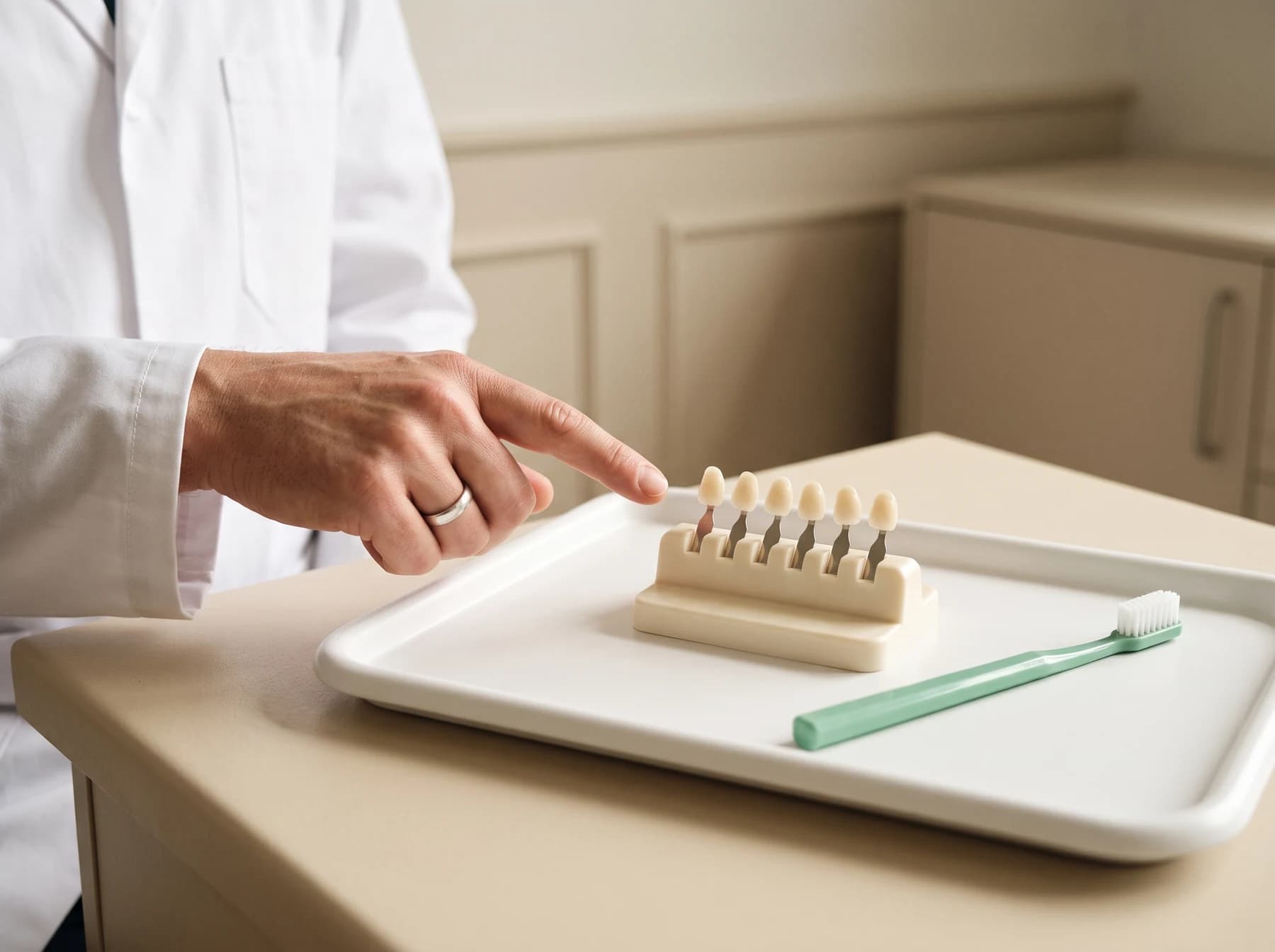
Keep each study's limits beside its numbers. Short follow-up cannot answer a long-term question, and one veneer material's results should not be transferred to another.
Published evidence by material
Klein, Spitznagel, Zembic et al., "Survival and Complication Rates of Feldspathic, Leucite-Reinforced, Lithium Disilicate and Zirconia Ceramic Laminate Veneers: A Systematic Review and Meta-Analysis", J Esthet Restor Dent 2025;37(3):601-619, reports the ceramic evidence. Lim, Tan, Li and Burrow, "Survival and Complication Rates of Resin Composite Laminate Veneers: A Systematic Review and Meta-Analysis", reports the resin-composite evidence.
| Material | Finding in the cited evidence | How to read it |
|---|---|---|
| Emax / lithium disilicate | Klein et al. reported 96.81 percent survival at a mean follow-up of 10.4 years. | A pooled study estimate, not an individual lifespan or a guarantee of no complications. |
| Feldspathic porcelain | The ceramic review includes feldspathic veneers with long-term follow-up. | Read the material-specific evidence; do not substitute the lithium-disilicate figure. |
| Resin composite | Lim et al. reported 88 percent pooled survival across randomized trials, with a 95 percent confidence interval of 81 to 94 percent. Mean follow-up ranged from 24 to 97 months. | The studies have different follow-up periods. This is not a universal replacement date or a matched comparison with the ceramic figure above. |
| Zirconia ceramic | The cited ceramic review does not establish a reliable comparable long-term veneer survival figure. | Short-term findings cannot supply a long-term estimate. |
These figures describe the cited study populations. They are not a forecast for an individual Colombia Smile Studio patient.
Three parts of the longevity discussion
02
Discuss bite, tooth condition and habits
Discuss your bite and tooth condition, including clenching, grinding or earlier restoration damage. Ask what those findings mean for the proposal. An examination is needed to apply them to your care.03
Make maintenance part of the plan
Get instructions for daily cleaning and professional review. Ask whether surface maintenance may be needed and how a concern would be assessed. Include the possible repair or replacement path before deciding on treatment.Repair, replacement and professional review
Veneers can chip, crack, wear or loosen over time. The American Dental Association's veneer guide explains that these changes may require rebonding, repair or replacement. The appropriate response depends on what a dentist finds.
Have a loose veneer, chipped edge, roughness or bite change assessed. A photograph can show your dentist what concerns you, but an examination may still be needed to find the cause. Keep the original material and treatment information available.
Ask what removal or replacement could involve and how a repair differs in your case. Read any warranty separately from the study evidence. The guide to veneer permanence and reversibility explains the longer-term treatment commitment.
Treatment timing is a different question
Getting veneers and keeping them are different timing questions. Placement follows assessment and planning, preparation when needed and fabrication for lab-made restorations. Ask for the appointment sequence and review steps before travel. Read veneer appointments and treatment stages for that discussion.
Plan care beyond the placement appointment
Follow your dentist's care instructions and attend professional reviews. Teeth can still develop decay around or beneath veneers. The ADA advises daily cleaning with fluoride toothpaste and avoiding habits such as chewing hard objects.
Ask about protection during sports and management of grinding where relevant. Have changes assessed instead of assuming they are a normal sign of age. Study survival figures cannot explain a symptom in your own tooth.

If treatment involves travel, clarify how a reviewing dentist will receive your records. Ask who would provide and pay for further care, and whether a repair or replacement might require another trip.
Five questions to keep with your plan
- Which evidence applies to the exact material proposed?
- How do my tooth condition, bite and habits affect the plan?
- What daily care and professional reviews are recommended?
- What would happen if a veneer needed repair or replacement?
- Who would provide and pay for follow-up care?
Compare complete treatment plans
Comparing veneer prices in Colombia requires more than a country label or headline number. First identify whether the proposed restoration uses composite resin or porcelain or ceramic. For a ceramic plan, distinguish a named material such as Emax from an unbranded ceramic tier. Then identify the lab by name and location and confirm the aftercare path for polishing, adjustments, repairs, or remakes after you return home, including whether travel may be required. This is market-level comparison guidance, not a Colombia Smile Studio price quote. Use the all-in cost model to compare like with like.
This page is for education only and does not replace an individual dental examination. Read the Terms and Medical Disclaimer.
Keep the evidence and care questions together
Use the Colombia Smile Studio guide to compare material evidence and prepare questions about maintenance and future care.
Patient questions
Veneer questions, answered
how long do veneers last
There is no guaranteed lifespan. The material and tooth condition matter, along with preparation and bonding. Bite and ongoing care also affect the discussion. Ask for evidence about the proposed restoration and for a clear repair or replacement path.
how long do porcelain veneers last
Porcelain veneer survival depends on the ceramic and clinical circumstances. Ask for evidence about the proposed material, such as lithium disilicate when Emax is named. Review the study's follow-up and limits alongside your bite, tooth condition and care plan.
how long do composite veneers last
Longevity varies with the resin and bonding, tooth condition, bite and maintenance. Composite may need attention for staining or wear and can often be repaired. Repairability does not promise a lifespan; ask how future care would be provided.
do veneers wear down
Veneers can develop wear or surface changes. Resin and ceramic behave differently. The bite and habits matter, along with ongoing care. Have roughness, chipping, thinning or a bite change assessed by a dentist.