Your dream smile abroad + private Medellin conciergeFree Veneers Abroad Guide for U.S. patients

Feldspathic Veneers: Hand-Layered Porcelain, Strengths and Trade-offs

Feldspathic veneers use porcelain that a ceramist builds in layers for detailed control over translucency and surface character. Learn what that craft can and cannot tell you, which case factors a dentist should review, and what to verify before comparing a material plan.

Compare the questions before you choose a clinic or plan a trip.

  • Clinical evidence with attribution and caveats
  • Candidacy signals a dentist should review
  • Material authenticity questions to ask any clinic
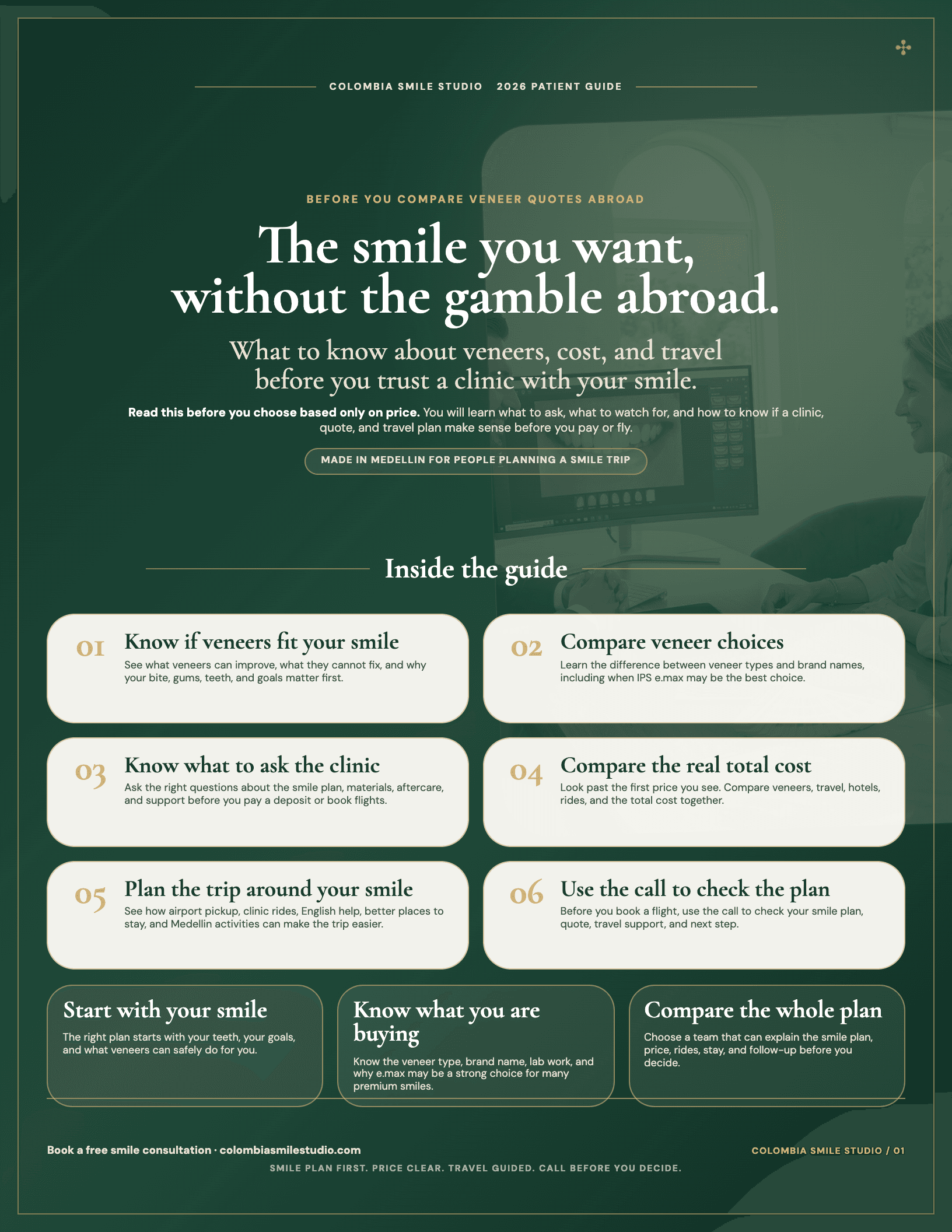
Cover of the free Colombia Smile Studio Veneers Abroad Guide
Adult speaking with a dentist beside a dental teaching model in a generic dental planning setting.
Material and craft

What feldspathic porcelain means, and what the label leaves unanswered

Feldspathic veneers are porcelain restorations that a ceramist builds by hand in thin layers. Instead of treating porcelain as one uniform block, the ceramist develops the restoration layer by layer to shape how color, depth, and light appear across the visible surface.

That process can give detailed control over translucency, internal color, surface texture, and edge character. Those qualities matter when a design needs to relate naturally to neighboring teeth, but the material name alone does not establish how the final smile will look.

Thinness is a design and case question, not a promise attached to the feldspathic label. The restoration must still account for the tooth's position, underlying color, available enamel, bite, planned shape change, and the space required for the intended optical effect.

A thin ceramic restoration should not automatically be called no-prep or reversible. A dentist must determine whether preparation is appropriate for each tooth and explain what will happen before treatment begins.

Hand layering also does not guarantee the most natural-looking result or make feldspathic porcelain universally better than another ceramic. The dentist's plan, the ceramist's execution, shade and shape review, bonding, and how the design fits the face all remain part of the result.

The porcelain veneers guide owns the broader porcelain category, while the veneers hub explains the treatment family. This page stays with feldspathic material education and the questions a patient can take into a dentist-led review.

Three planning decisions

How a feldspathic veneer question becomes a tooth-by-tooth plan

A material preference should follow the restoration, optical goal, and clinical plan for each tooth. The dentist, ceramist, and patient need a connected approach to design, preparation, bonding, records, and follow-up before treatment begins.

01

Decide what each tooth needs

A dentist first reviews oral health, existing restorations, tooth structure, available enamel, tooth position, underlying shade, and the bite. The responsible question is whether a veneer, another restoration, or no restorative treatment fits each tooth after an individual examination.

02

Match light handling and masking to the design

Translucency, masking, material thickness, shade, surface texture, edge character, and the underlying tooth color should be considered together. More translucency is not automatically better, and more masking is not automatically better. The optical plan should serve the case-specific restoration and smile design.

03

Verify the ceramist and treatment workflow

Ask who is responsible for the design, preparation, try-in, bonding, and ceramic work, which material system is proposed, which records will be provided, and what the written follow-up path covers after returning home. The plan should name those responsibilities instead of relying on a material label alone.

Candidacy and dentist review

Where feldspathic may fit, and what a dentist should review

Feldspathic porcelain may be considered for select front-tooth cases where layered translucency and individualized ceramic artistry matter. That possibility does not establish candidacy. A dentist must first decide whether a veneer or another path fits each tooth after examining oral health, existing dental work, tooth structure, enamel, position, underlying shade, and the bite.

The amount and location of any preparation depend on the tooth and the proposed change. Tooth position, existing shape, available enamel, underlying color, masking needs, planned thickness, and the intended shade and form all affect the design. A feldspathic label cannot supply a universal no-prep answer.

Feldspathic porcelain is more delicate than pressed or monolithic ceramics, so the dentist must also weigh bite forces, clenching, grinding, edge contact, bonding conditions, ceramist skill, and the follow-up path. These factors work together, and an online description cannot diagnose fit for an individual patient.

Adult reviewing a dental teaching model and shade guide with a dentist in a generic consultation setting.

What the dentist reviews

A feldspathic veneer question should bring these checks together:

Tooth foundation and enamel
The condition and structure of each tooth, existing restorations, oral health, tooth position, underlying shade, and the amount and quality of enamel available for bonding.
Color, translucency, and preparation plan
The color that may need to be preserved, changed, or masked, the planned thickness and preparation, and how translucency, shade, shape, texture, edge character, and neighboring teeth affect the design.
Bite, ceramist, bonding, and follow-up
Bite forces, clenching, grinding, edge contact, ceramist responsibilities, bonding conditions, and the written maintenance, adjustment, repair, and follow-up path.

The American Dental Association's veneer guide explains the general veneer process and why treatment planning belongs to a dentist. The exact restoration, preparation, material, and bonding plan remains case-specific. A material description or search query cannot determine treatment for a patient.

Craft, verification, and value

What the feldspathic label does and does not verify

The word feldspathic identifies a porcelain family, but it does not establish the exact material system, the ceramist's workflow, the planned preparation, the bonding approach, or what happens after treatment. Those details must come from the written tooth-by-tooth plan and the people responsible for it.

Hand layering can support fine control over translucency, internal color, texture, and edge character. It cannot guarantee an appearance or outcome. Tooth condition, the underlying shade, material thickness, preparation, design review, ceramist execution, bonding, bite, maintenance, and follow-up all remain relevant.

White-coated hands applying a fine brush to a flat ivory educational tile beside a closed dental teaching model.

Longevity should be discussed qualitatively on this page because a pooled research result cannot predict an individual restoration. Read how long veneers last for the material-by-material evidence and its limits rather than treating one lifespan as a promise.

Ask any clinic to identify the material system, the restoration proposed for each tooth, the ceramist or laboratory and its location, who reviews the design, how preparation and bonding are planned, which records are supplied, and what written follow-up responsibilities apply. The conceptual craft image in this section is not proof of an actual Colombia Smile Studio lab, ceramist, material, supplier, product, protocol, or result.

For adjacent material education, read the Emax veneer guide and zirconia veneer guide. Use the Emax, zirconia, and composite comparison for the broader buyer decision. That comparison belongs in the broader guide, while this page stays with feldspathic-specific questions.

Feldspathic veneer cost can vary with the restoration on each tooth, tooth count, material system, ceramist or laboratory workflow, smile design, preparation and bonding needs, written inclusions, aftercare, and whether follow-up may require travel. This page publishes no feldspathic treatment price. Use the all-in veneer cost guide for detailed cost guidance.

Comparing veneer prices in Colombia requires more than a country label or headline number. First identify whether the proposed restoration uses composite resin or porcelain or ceramic. For a ceramic plan, distinguish a named material such as Emax from an unbranded ceramic tier. Then identify the lab by name and location and confirm the aftercare path for polishing, adjustments, repairs, or remakes after you return home, including whether travel may be required. This is market-level comparison guidance, not a Colombia Smile Studio price quote. Use the all-in cost model to compare like with like.

A country name alone does not establish the quality or safety of any individual treatment plan. What decides that is the treatment itself: the restoration and material class (composite resin vs porcelain; Emax vs unbranded ceramic), the lab and where it is, the treating dentist's credentials, the aftercare and adjustment path once you are home, and the written warranty or remake policy. Weigh those against the quote, not headline price alone.

Feldspathic porcelain can represent good value when the restoration, optical plan, ceramist workflow, preparation, bonding, written inclusions, and follow-up fit the patient. Value does not come from a material label or the smallest headline number. A dentist must first decide whether a veneer and the proposed material are appropriate for the teeth and bite.
Free planning guide

Compare feldspathic veneer questions with one guide

Use the guide to organize restoration, material, clinic, cost, ceramist, preparation, bonding, and aftercare questions before you evaluate a veneer treatment trip.

Patient questions

Common questions about feldspathic veneers

Use these answers to understand the material, fabrication, and fit questions worth taking to a dentist. They are educational and cannot determine an individual plan without an examination.

What are feldspathic veneers?

Feldspathic veneers are porcelain restorations that a ceramist builds by hand in thin layers. This layered process gives the ceramist detailed control over translucency, internal color, surface texture, and edge character. Whether the material fits a particular smile depends on the teeth, bite, planned change, and a dentist's examination.

How do feldspathic veneers differ from pressed porcelain?

Feldspathic porcelain is built by hand in layers, which allows detailed control over translucency and surface character. Pressed porcelain is shaped through a controlled pressing process, producing a more uniform material with generally greater strength. Emax can be made as a pressed ceramic. These are material differences, not a verdict about which option fits an individual case.

Are feldspathic veneers a good choice?

Feldspathic veneers can be a good fit for select front-tooth cases where layered translucency and individualized ceramic artistry matter. They are more delicate than pressed or monolithic ceramics, and the result depends heavily on ceramist skill, the condition of the teeth, the bite, and the dentist's design. A dentist must decide whether those trade-offs fit an individual case.

Free planning guide

Ready to plan your dream smile abroad?

Get the free Veneers Abroad Guide and see the full picture: real costs, clinic-standard questions, and what to ask before you ever book a flight.