01
Define who removes the restoration
State whether the restoration is fixed for routine home care or removable by the patient, how it is retained, and which parts remain in the mouth when the restoration is removed.
Implant dentures can be fixed for routine home care or removable by the patient. Define who removes the restoration, how it connects, how it is cleaned, what happens during healing, and which records and follow-up belong in the plan.
Compare the questions before you choose a clinic or plan a trip.
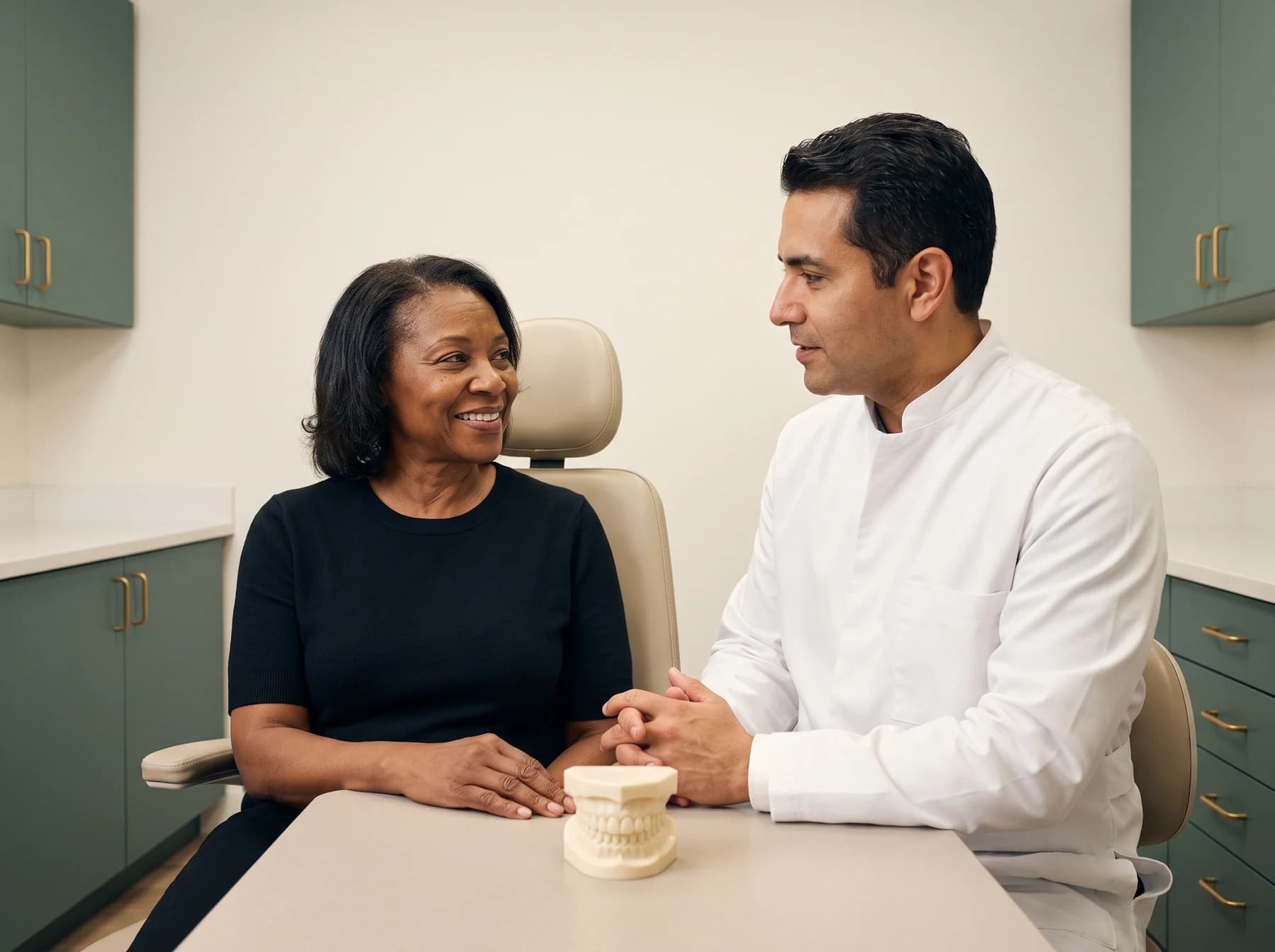
Implant dentures describe replacement teeth that use dental implants for retention or support. Depending on the design, the restoration may stay fixed for routine home care and be removed only by a dental professional, or it may be removable by the patient according to provider instructions.
Terms such as snap-in denture, overdenture, and permanent denture are not always used consistently. The written plan should identify the restoration, attachment system, removable or fixed status, who removes it, and how the mouth, attachments, and replacement teeth are cleaned.

The FDA explains that implants can support dentures as well as crowns and bridges. The American Dental Association explains that implants can provide retention or support for an overdenture.
The label alone does not establish an implant number, attachment design, temporary restoration, final restoration, treatment sequence, maintenance plan, or whether a design fits an individual. Those details depend on examination findings and a professional treatment plan.
State whether the restoration is fixed for routine home care or removable by the patient, how it is retained, and which parts remain in the mouth when the restoration is removed.
Identify the implant bodies, attachments or connectors, temporary restoration when applicable, final restoration, imaging, related procedures, and which details remain dependent on examination and healing.
Ask for restoration-specific hygiene instructions, professional fit and attachment checks, who assesses adjustments or repairs, system and component records, completed-stage notes, follow-up contacts, and the information another dentist would need.
Oral findings, health history, imaging, supporting tissues, and the condition of any remaining teeth help the dental team define which designs can be evaluated. A page cannot turn those findings into a candidacy decision or implant-count prescription.
The restoration design adds practical questions. Fixed and removable paths differ in retention, cleaning access, who removes the restoration, how fit and attachments are checked, and what temporary-to-final sequence may be needed.
If a patient already wears dentures, the current denture and prior records belong in the examination. The dental team must decide whether it has any role in the proposed process or whether a different temporary or final restoration would be needed.

Care depends on the actual restoration. A removable implant denture requires care for both the denture and the tissues and attachments in the mouth. A fixed design requires access around and beneath the restoration according to clinician instructions. NIDCR oral-hygiene guidance emphasizes plaque removal and continuing professional care. Ask for a hands-on demonstration for the exact restoration design.
Professional review should address fit, attachment wear or damage, tissue health, cleaning access, and changes in how the restoration feels or functions. Do not adjust a denture, attachment, or implant component yourself. Ask whom to contact and what information the reviewing professional will need.
Keep the implant-system and component identification, restoration and attachment descriptions, imaging, completed-stage records, hygiene instructions, and follow-up contacts together. Those records can help another dental professional understand the design if assessment is needed later.
A conventional denture is removable. An implant-retained removable denture connects to implants through attachments and is removed by the patient according to provider instructions. A fixed implant restoration is removed only by a dental professional when clinically needed. None of these labels is automatically better for every patient.
The FDA notes that implant healing may take several months or longer. The American Dental Association implant guide says a dentist may provide a temporary crown, bridge, or denture while a final replacement is being made. Whether a current denture can be worn, adjusted, relined, replaced, or paused depends on the individual plan.
Continue with Dental Implants for implant parts and type orientation, Full Mouth Dental Implants for the broader full-mouth category, All-on-4 Dental Implants for one fixed full-arch concept, and Dental Implant Procedure for the broader stage sequence.
Country-specific planning remains with Dental Implants in Colombia and Dental Implants in Costa Rica.
Use the guide to organize treatment, records, clinic, travel, and aftercare questions before you decide.
These answers explain fixed and removable design boundaries. An individual examination still controls the treatment decision.
Implant dentures describe replacement teeth that use dental implants for retention or support. Depending on the design, the restoration may be fixed and removed only by a dental professional, or removable by the patient according to provider instructions. The implant number, attachments, restoration, and maintenance plan vary by individual treatment plan.
Wearing dentures does not by itself determine whether implants are appropriate. A dental professional needs to evaluate the mouth, gums, bone, health history, current denture, and proposed restoration before recommending a plan. Bring the current denture and prior records to the examination, and ask whether a new temporary or final denture would be needed.
No single design is better for every patient. Conventional dentures, implant-retained dentures, and fixed implant restorations have different clinical requirements, cleaning routines, maintenance needs, and tradeoffs. Ask what problem the proposed design is intended to address and why it fits the findings from your examination.
A dentist may provide a temporary crown, bridge, or denture during implant healing, but whether an existing denture can be worn, adjusted, relined, replaced, or paused depends on the individual surgical and restorative plan. Do not adjust a denture or implant component yourself. Get the temporary-tooth plan in writing before treatment.
Implant-retained or implant-supported replacement teeth may follow a fixed or removable design. A snap-in denture or overdenture is removable by the patient, while a fixed full-arch restoration is removed only by a dental professional when clinically needed. Ask the plan to identify who removes it, how it connects, and how it is cleaned and maintained.
This page is for education only and does not replace an individual dental examination. Read the Terms and Medical Disclaimer.
Get the free Veneers Abroad Guide and see the full picture: real costs, clinic-standard questions, and what to ask before you ever book a flight.