Dental Implants in Colombia: Plan the Treatment Before the Trip
Before planning dental implants in Colombia, understand the proposed teeth and the care they will need. A written treatment sequence should explain what happens during each visit, what depends on healing and how follow-up will work after you return home.
Planning an implant trip? The free guide is written for veneers, but its clinic checklist and trip planning help with any dental trip abroad.

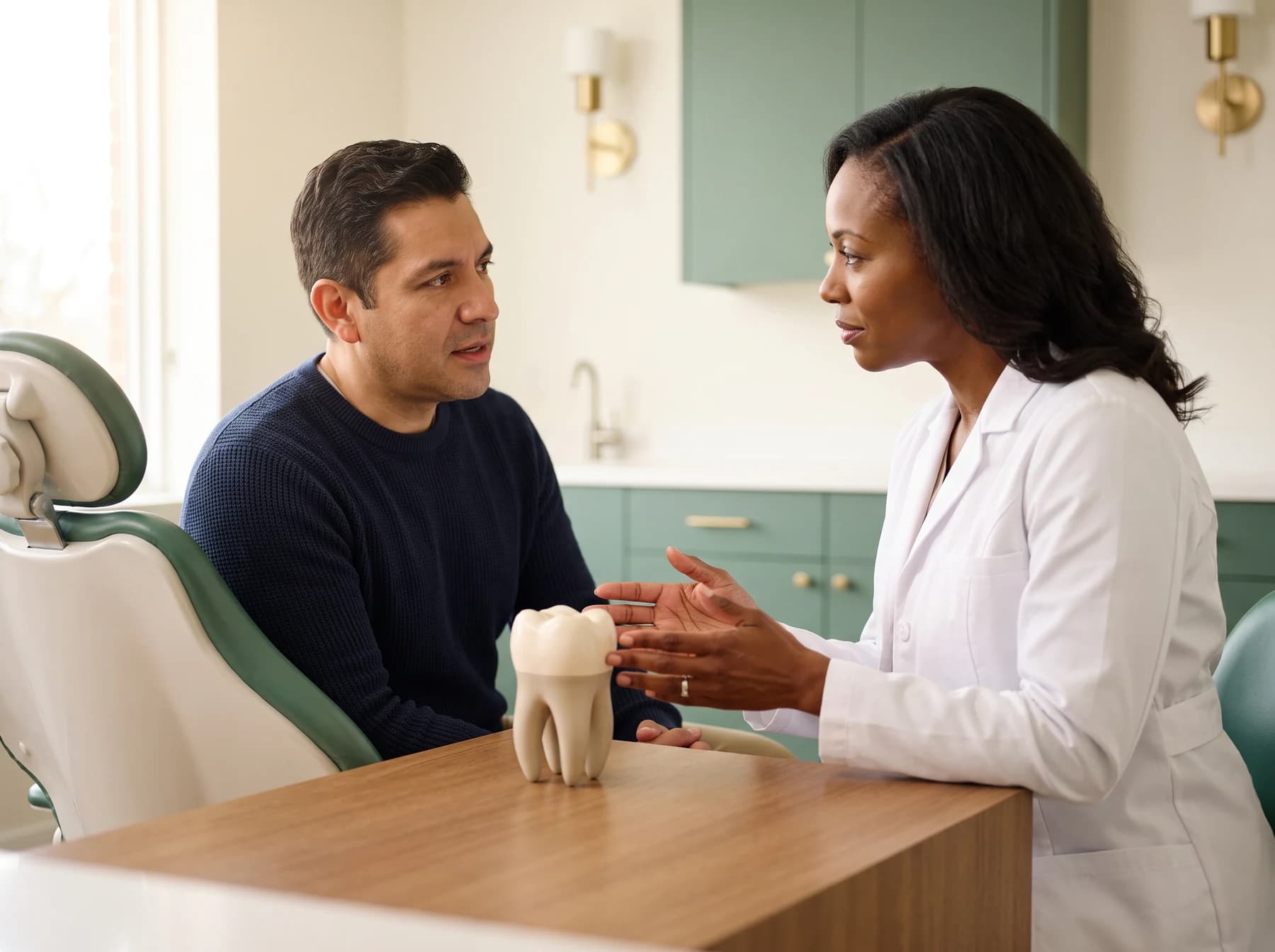
Read the treatment plan before arranging travel
A dental implant plan can involve an implant body placed in the jaw, an abutment or related connecting part, and a crown, bridge, or denture that replaces the visible tooth or teeth. It can also involve imaging, proposed site preparation or related procedures, a temporary stage when applicable, and the final restoration.
For treatment abroad, each stage needs an owner and a location. The written sequence should show which care takes place in Colombia and which care may take place at home. It should also separate confirmed arrangements from decisions that depend on examination findings or healing.

The FDA explains that a dental implant system can include an implant body, an abutment, and an abutment fixation screw that supports an artificial tooth or teeth. Ask for the proposed system and component identification in the written records.
Your health history and dental findings determine the clinical plan. The dentist needs to assess the proposed restoration and its support before you can build an itinerary around treatment.
Three decisions before dental implant travel to Colombia
- 01
The teeth and supporting components
The proposal should name the teeth being replaced and the restoration they will receive. Implant bodies and connectors need their own descriptions, along with any temporary teeth. Imaging or related procedures that depend on examination findings should be marked as conditional.
- 02
The professional responsible for each stage
Surgery and restoration may involve different responsibilities. The plan should name the treating professionals and facility, identify the stages that require travel and explain what must be reviewed before each later stage can begin.
- 03
Records and care after the return home
Your records need to travel with you. Keep the system and component identification alongside imaging and completed-stage notes. Restoration details, cleaning instructions and follow-up contacts help another dentist understand the care already provided.
Know who will provide care at each stage
The CDC Yellow Book medical-tourism guidance recommends evaluating the individual facility and treating professional, clarifying follow-up, and arranging the records needed for continuity of care. A country name cannot supply those details. Health history, oral findings, and imaging still require individual professional review.
A named professional should be responsible for evaluating the case, each clinical stage and the final restoration. Verify current credentials through the appropriate authority and identify the facility where treatment would occur. The clinical review should explain how the restoration's design relates to function and access for maintenance.
A change in the clinical sequence can affect travel arrangements. Before finalizing the itinerary, establish who will explain a delayed stage and who can coordinate assessment after you return home.
What to verify before the itinerary is final
- The professional responsible for each stage
- Confirm the treating professionals, responsibility for each stage, and who evaluates changes before the plan proceeds.
- Facility and treatment records
- Identify the facility and the proposed system and restoration. Keep imaging with notes on completed stages so the record describes what care was provided.
- Follow-up and care after travel
- Keep routine and urgent contacts with the information another dentist needs. Agree how records will be shared and who handles care after you return home.
Let the clinical sequence set the itinerary
Implant care can involve stages separated by healing and professional review. The FDA notes that healing for the implant body may take several months or longer, but an individual plan must determine the sequence. Ask what must happen during each trip and what findings control the move to the next stage.
Separate confirmed travel arrangements from dates that depend on examination or healing. Your contingency plan should address a longer stay or another visit, including whom to contact if temporary teeth need attention between stages.
Keep your treatment records together, including imaging and the details of the system and restoration. Include notes on completed stages, cleaning instructions and follow-up contacts. The CDC advises medical travelers to request overseas records in English and share them with later treating professionals.
Questions for the travel and records plan
- Which clinical stages must happen in Colombia?
- What must be reviewed before each later stage is confirmed?
- Who is responsible for the implant and restoration stages?
- Which records will be provided after each completed stage?
- Who should be contacted for follow-up after the patient returns home?
Continue with Dental Implants for the broader components and planning framework, Dental Tourism in Colombia for destination logistics, and Dental Implant Procedure for a general stage overview.
Plan the trip with the free guide
The Colombia Smile Studio guide is written for veneers, but two parts carry over to an implant trip. Its clinic checklist covers who treats you, how appointments run and what happens if the fit or bite needs adjusting. Its travel pages help you plan the trip itself.
Dental implant planning questions for Colombia
These answers explain what to clarify before travel and what to carry home after treatment.
What Should I Verify Before Planning Dental Implants in Colombia?
Start with the treating professionals and facility, then review the proposed teeth and supporting implant components. The plan should explain the clinical stages and travel requirements, with records and follow-up contacts provided in writing. An individual examination and imaging must determine the final treatment plan.
What Should a Written Dental Implant Plan in Colombia Include?
A written plan should describe the restoration and its implant supports, any related procedures and the proposed temporary stage. It should name who provides each stage and explain the records and follow-up you will receive. Confirmed details should be separated from decisions that depend on examination or healing.
How Are Dental Implant Visits Organized When Treatment Involves Travel to Colombia?
Visits follow the individual clinical sequence and healing assessments. Before arranging travel, establish which stages require your presence in Colombia and which may happen at home. The plan should explain what is reviewed between visits and what could require a longer stay or another trip.
What Records Should I Request After Dental Implant Care in Colombia?
Keep the implant-system brand and model with the component identification, imaging and completed-stage notes. Include the restoration details and written cleaning instructions, with contacts for follow-up. Request records in English when you will share them with professionals at home.
How Should Follow-Up Be Planned After Returning Home From Colombia?
Agree on a follow-up contact before treatment and establish how records will reach a dentist at home. The arrangement should explain who handles a loose or painful implant or another unexpected change, and what may need local assessment. A home dentist must decide what care they are willing and able to provide.
This page is for education only and does not replace an individual dental examination. Read the Terms and Medical Disclaimer.