Material information
Use the Emax reference as background if that name appears. Ask the practice to document the intended material rather than copying a specification from another local proposal.
A veneer proposal can become difficult to follow when different metropolitan practices are involved. Ask which dental team owns the current explanation, material specification and review record.
Compare the questions before you choose a clinic or plan a trip.
For veneers in Guadalajara, put the treating practice and municipality on the written tooth and material proposal. If assessment or review is referred elsewhere in the metropolitan area, ask who explains the findings and updates the plan. Do not assume that practices using a Guadalajara label share a laboratory or records; retain the proposal and direct clinical contacts.
Ask the practice to include its complete address and operating name on the proposed treatment document. A metropolitan label is useful for a search but insufficient for identifying where an examination or review would occur.
Start by asking what each treated tooth will receive. The American Dental Association's veneer guide explains that a veneer covers the front surface of a tooth, while a crown covers the tooth rather than only its front. Composite bonding applies tooth-colored resin to reshape or repair a tooth. When resin covers the visible front surface, it may be described as a composite veneer. The amount of tooth structure treated and the appropriate restoration remain case-specific, so a dentist must make that decision. Then name the material class.
The veneer guide and veneers versus crowns reference help frame questions about the work proposed for each tooth.
A country name alone does not establish the quality or safety of any individual treatment plan. What decides that is the treatment itself: the restoration and material class (composite resin vs porcelain; Emax vs unbranded ceramic), the lab and where it is, the treating dentist's credentials, the aftercare and adjustment path once you are home, and the written warranty or remake policy. Weigh those against the quote, not headline price alone.
No Guadalajara price or savings estimate is given here. Request the restoration class, named material tier, lab identity and location, and written aftercare or adjustment responsibilities from the actual treating practice.
Use the Emax reference as background if that name appears. Ask the practice to document the intended material rather than copying a specification from another local proposal.
Request the lab name and location for this proposed work. Do not assume that practices in Guadalajara and Zapopan use the same lab because they appear under one metropolitan search.
If another practice is asked to assess a question, clarify its purpose and how the findings return to the dentist explaining your plan. Ask which version becomes the current proposal.
Request the treating dentist’s explanation when another assessment changes the tooth scope or material choice. Keep the updated proposal identified by practice and date, and ask what remains undecided. A new metropolitan appointment address alone does not explain why the dental plan changed.
The Guadalajara city guide helps compare municipality and provider identities. Jalisco’s regional directory names Guadalajara and surrounding destinations; it does not establish clinical relationships between their practices.
Ask which practice retains the final treatment and material record and how a reviewing clinician receives it. If the review moves, request the new municipality, address and provider along with the record handoff. Keep the original dental contact available for clarification.
Use the Mexico hub for broader planning. The separate Guadalajara implant page addresses missing-tooth research rather than extending the veneer proposal to another treatment.
The Colombia Smile Studio veneer travel guide can help organize further questions. Ask the responsible dentist to clarify which written proposal reflects the plan currently being discussed.
Request the municipality and full address alongside the operating practice name on the clinical proposal. Match it to the assessment appointment. A Guadalajara heading should not hide that an examination or review is proposed in another metropolitan municipality.
Ask what question the referral addresses, who receives you and what information that practice needs. Clarify how the findings return to the dentist explaining your proposal. A second address is not enough to show who owns the resulting clinical decision.
Ask the treating dentist to explain and document any revised recommendation, including the contribution of the other assessment. Clarify which practice issues the current proposal and resolve your questions before deciding. Do not infer approval from movement between locations or a coordinator’s itinerary.
Request the lab’s name and location for the work proposed by each practice. Keep that specification attached to the relevant provider and material description. A shared metropolitan label or similar ceramic wording is not evidence of a shared laboratory.
It should identify the new practice, municipality, address and responsible clinician, together with the original treatment information supplied for review. Ask who explains the findings to you and communicates with the treating dentist. Keep the move documented as a clinical handoff.
Ask the treating practice to identify and retain the current version and provide you a copy. Clarify how any other assessing or reviewing clinician receives it. Keep superseded proposals distinguishable so different locations do not work from inconsistent descriptions.
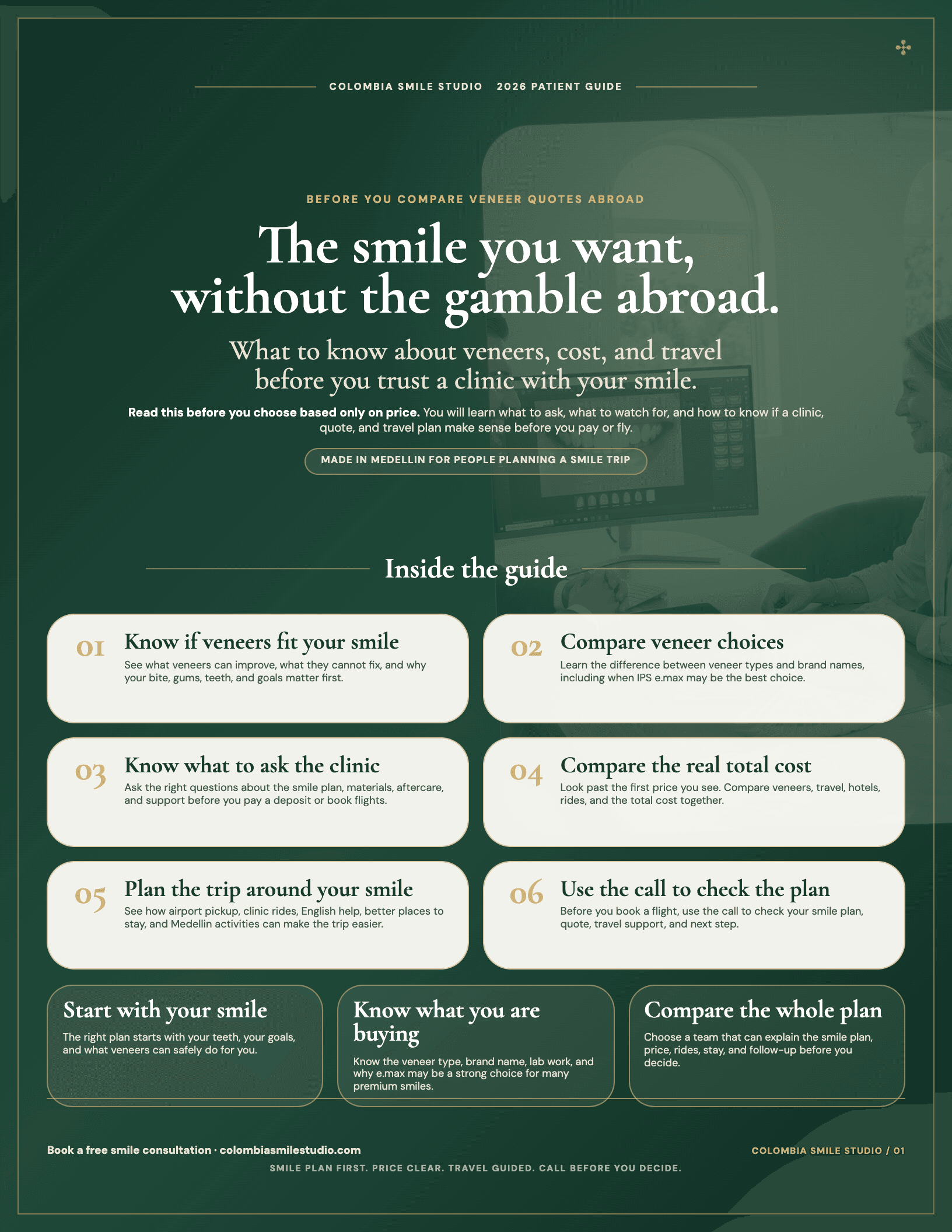
Get the free Veneers Abroad Guide and see the full picture: real costs, clinic-standard questions, and what to ask before you ever book a flight.
This page is for education only and does not replace an individual dental examination. Read the Terms and Medical Disclaimer.