Tooth scope
Ask for the proposed teeth to be identified individually, with the reason for including each one. If plans differ, request an explanation of the difference before treating them as equivalent.
Make your smile goals the starting point. Explore the material, tooth scope and written explanations to discuss before planning veneer treatment in Colombia.
Compare the questions before you choose a clinic or plan a trip.

Planning veneers in Colombia means asking a dentist to connect your smile goals with an individual examination, the teeth proposed for treatment and the identified material. Request those details in a written plan, including alternatives and care responsibilities. Country research helps organize that comparison; a Medellín planning guide addresses the next city-specific questions.
A useful starting note separates what you want to change from what a dentist proposes to do. Record your preferences, then ask for an explanation of the restoration proposed for each tooth. The veneer overview and veneers and crowns guide provide background for that discussion.
Start by asking what each treated tooth will receive. The American Dental Association's veneer guide explains that a veneer covers the front surface of a tooth, while a crown covers the tooth rather than only its front. Composite bonding applies tooth-colored resin to reshape or repair a tooth. When resin covers the visible front surface, it may be described as a composite veneer. The amount of tooth structure treated and the appropriate restoration remain case-specific, so a dentist must make that decision. Then name the material class.
Use the material guides to clarify unfamiliar names: porcelain, Emax, composite, zirconia, feldspathic porcelain and Lumineers. Reading about a material does not establish that it belongs in your treatment plan.
A country name alone does not establish the quality or safety of any individual treatment plan. What decides that is the treatment itself: the restoration and material class (composite resin vs porcelain; Emax vs unbranded ceramic), the lab and where it is, the treating dentist's credentials, the aftercare and adjustment path once you are home, and the written warranty or remake policy. Weigh those against the quote, not headline price alone.
Comparing veneer prices in Colombia requires more than a country label or headline number. First identify whether the proposed restoration uses composite resin or porcelain or ceramic. For a ceramic plan, distinguish a named material such as Emax from an unbranded ceramic tier. Then identify the lab by name and location and confirm the aftercare path for polishing, adjustments, repairs, or remakes after you return home, including whether travel may be required. This is market-level comparison guidance, not a Colombia Smile Studio price quote. Use the all-in cost model to compare like with like.
Ask for the proposed teeth to be identified individually, with the reason for including each one. If plans differ, request an explanation of the difference before treating them as equivalent.
Request the material class and any named brand or tier in writing. Keep the lab identity and location, and the proposed care arrangements after returning home, beside that description.
Mark which decisions await examination and which alternatives you want explained. The clinic standards guide offers a broader checklist; the clinic introduction is a separate place to research clinic identity.
Tell the dentist about existing crowns, fillings and previous dental work, and ask which records would help them assess your goals. Describe concerns about your current teeth as well as the appearance you hope to achieve. Avoid treating a reference photograph as an agreed treatment specification.
The ADA patient guide to veneers emphasizes discussing dental history and expectations with a dentist. Ask what your examination could change about the proposed scope before settling on appointment dates.
Continue with veneer planning in Medellín when your questions concern a specific city assessment. Keep the Colombia dental travel overview and travel planning reference available for the wider arrangements.
Before completing your arrangements, identify the records you would receive and the person who would explain them. Ask how the treating team and your dentist at home could exchange information, and which language the records would use.
The CDC guidance on medical tourism supports planning for continuity of care and obtaining treatment records. Turn that into specific questions about routine maintenance, adjustments and who would address a concern after your return.
Keep the proposed responsibilities for payment, further appointments and any return travel in the same written record. An unanswered item remains something to resolve with the provider, rather than an inclusion to assume.
Use the Colombia Smile Studio veneer travel guide alongside your notes on materials, proposed teeth and the questions you still want answered.
Ask for an identified tooth scope, the proposed restoration and material, and the alternatives the dentist has considered. Include the responsibilities for records and continuing care. Keep the explanation of undecided items with the plan so your preferences are not mistaken for a clinical recommendation.
Request the material name in writing and ask how the provider will document what is used. Read the relevant material guide to prepare follow-up questions, then ask the dentist why that material is proposed for your teeth. A material label alone does not answer the individual treatment question.
Ask each dentist to explain the teeth included and the reasoning behind the proposed scope. Note whether an existing restoration or another dental concern accounts for a difference. Do not reconcile the plans by selecting a tooth count yourself; take the discrepancy back for a clinical explanation.
Tell the assessing dentist where you have crowns or fillings and ask which previous records they would like to review. Ask how those restorations affect the options under discussion. The examination should inform that explanation; photographs and a list of existing work do not settle suitability.
Describe the shade, shape or other feature you would like to discuss and ask the dentist to explain any limits or alternatives. Request an updated written proposal if the agreed scope changes. Keep the difference between a preference and an accepted treatment decision explicit.
Move to the Medellín veneer guide when you need to prepare for an assessment in that city. Keep this country page for the treatment-scope and material questions you can use across your research. Choosing a city does not replace the individual assessment.
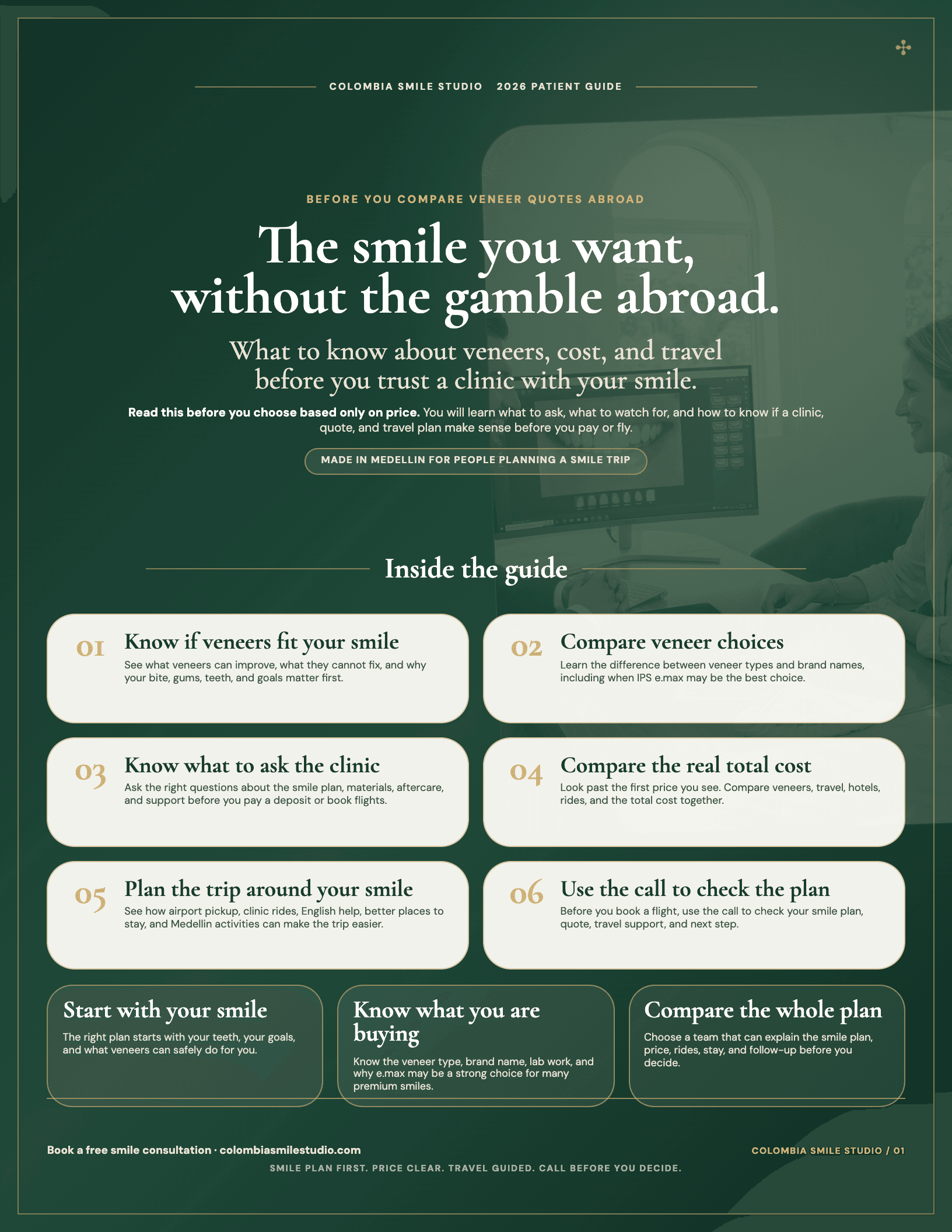
Get the free Veneers Abroad Guide and see the full picture: real costs, clinic-standard questions, and what to ask before you ever book a flight.
This page is for education only and does not replace an individual dental examination. Read the Terms and Medical Disclaimer.