Your dream smile abroad + private Medellín conciergeFree Veneers Abroad Guide for U.S. patients

Veneers vs dentures

Compare veneers vs dentures by what they treat, how they fit and what daily care involves. Start with the condition of your teeth, then consider cost and appointments.

Prepare questions about your treatment and the trip around it.

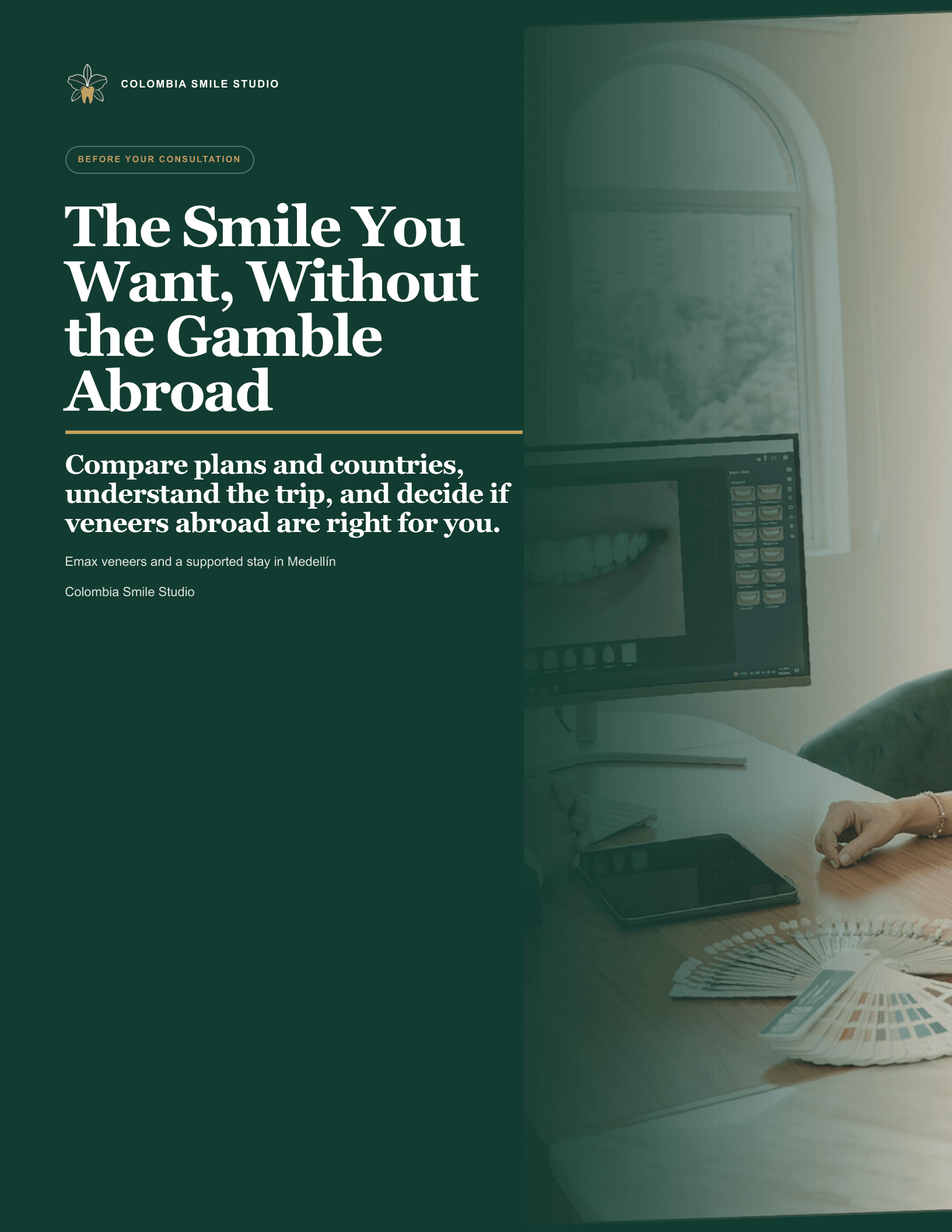
    Cover of the free Colombia Smile Studio Veneers Abroad Guide
    Illustrative photograph of a woman discussing dental options with a clinician at a table.

    Quick Answer

    Veneers vs dentures comes down to whether the teeth are present. Veneers cover existing teeth to change their appearance. Dentures replace missing teeth. Partial dentures replace some teeth; full dentures replace an entire arch. An examination determines which options fit your mouth.

    Veneers vs dentures: the main differences

    Veneers cover the front of teeth you still have. Dentures replace teeth that are missing. That distinction determines which treatment belongs in your plan before you compare materials or shades.

    Both can involve selecting tooth color and shape. Similar-looking teeth do not mean the same treatment underneath.

    Illustrative photograph of tooth-shade samples and a dental mirror on an ivory tray.

    Compare what each treatment does

    QuestionVeneersRemovable dentures
    What do they treat?Appearance concerns in teeth that remain.Spaces left by missing teeth.
    What supports them?The natural tooth beneath each bonded covering.The gums and, depending on design, remaining teeth or implants.
    Can you remove them?No. They stay bonded to the teeth.Yes, following the cleaning and wear instructions.
    What preparation is involved?Tooth assessment and usually some enamel removal.Assessment and impressions, with other treatment when needed.
    What needs review?The veneer, underlying tooth and gums.Fit, mouth tissues and any supporting teeth or implants.

    The ADA guides to veneers and dentures describe these different roles. Comparing veneers vs dentures starts with an examination of which teeth can be kept and which spaces need replacement.

    Match the treatment to your teeth

    01

    Teeth present, appearance concerns

    Discuss the color or shape you want to change. Decay or gum disease needs treatment before veneers. Ask whether whitening or dental bonding could address the concern, and how much enamel the proposed veneer preparation would remove.

    02

    Some teeth missing

    Veneers vs partial dentures is a question about different teeth. A partial denture fills missing-tooth spaces while natural teeth remain. Veneers may be considered for suitable remaining teeth, but they cannot fill an empty socket. Read about planning veneers with missing teeth.

    03

    All teeth missing in an arch

    Full dentures replace an entire upper or lower set of teeth. Veneers need natural teeth and cannot serve this purpose. If extractions are proposed, ask why each tooth cannot be retained and what temporary teeth and healing reviews would be needed.

    Veneers vs dentures cost: compare the full plan

    A veneer price per tooth and a denture price per arch describe different amounts of treatment. For a useful veneers vs dentures comparison, request a written plan showing which teeth are involved and what each fee includes.

    Ask for examination fees and preparation costs. Check the laboratory charges too. Then check whether temporary teeth, fitting adjustments and follow-up appointments are included. If treatment requires travel, include accommodation and any return visits in the total.

    Veneers vs dentures vs implants

    An implant is placed in the jaw and supports replacement teeth. A denture can attach to implants, so the terms can describe parts of the same treatment. The FDA implant guide explains the surgery and healing involved. Clarify whether the final teeth would be removable or fixed, and who removes them for maintenance.

    For those designs, see implant dentures. Our dental implants vs veneers comparison covers the distinction between a tooth covering and an implant-supported replacement.

    Questions for a written quote

    • Which teeth will be treated, retained or replaced?
    • What material and restoration design are included?
    • Which adjustments or remakes would incur another fee?
    • Who provides follow-up care after you return home?

    A veneers vs dentures price comparison should also account for future maintenance. Avoid choosing a treatment solely because its headline price is lower. It must address the condition of your teeth.
    Daily care and follow-up

    Daily care differs for veneers vs dentures. Veneers remain attached while you brush and clean between your teeth. Removable dentures need their own cleaning routine, along with care for your mouth and remaining teeth.

    Ask for written instructions and check that the recommended supplies are easy to use at home.

    Illustrative photograph of a toothbrush, floss container and empty denture case on a vanity.

    The ADA recommends daily denture cleaning with suitable nonabrasive products. Follow the instructions for your particular appliance. Have persistent soreness, looseness or damage assessed rather than trying to adjust it yourself. Teeth beneath veneers still need decay prevention and professional review.

    Allow time for fitting and adjustments

    New dentures can take time to get used to, and follow-up adjustments may be needed. Immediate dentures fitted after extractions may need relining or replacement as tissues heal. Confirm the appointment sequence before booking flights. Veneer treatment has its own preparation and fitting schedule. If your plan includes an interim stage, read about temporary veneers before the final fitting.

    For either treatment, keep your written plan and material details. Agree on who to contact if your bite feels wrong or something becomes uncomfortable after you travel home.

    Clinical sources

    Sources checked October 31, 2026. Images are generated editorial illustrations. This page is for education only and does not replace an individual dental examination. Read the Terms and Medical Disclaimer.

    Bring a clear set of questions

    Use the Colombia Smile Studio Veneers Abroad Guide to organize clinic questions and travel planning before deciding on treatment.

    Patient questions

    Veneer and denture questions, answered

    Which treatment is better for missing teeth?

    A veneer cannot replace a missing tooth because it needs a tooth to bond to. Dentures are one replacement option. A dentist can also discuss bridges or implant-supported teeth, depending on the spaces, remaining teeth and examination findings.

    Can I get veneers if I already wear partial dentures?

    Possibly, for suitable teeth that remain. Your dentist needs to assess how the partial denture attaches and how any proposed veneers would affect its fit and your bite. Plan both together before changing the shape of a supporting tooth.

    Does insurance cover veneers and dentures the same way?

    No. The ADA describes veneers as cosmetic treatment that may not be covered unless medically necessary. Denture benefits depend on your plan. Request a written benefits estimate for the exact treatment, including any restrictions on care outside the United States.

    Are veneers removable like dentures?

    Dentist-bonded veneers stay attached to your teeth. You do not take them out to clean them. A removable denture comes out for cleaning as instructed. An implant-supported restoration may be fixed or removable, so ask which design is proposed.

    How long do veneers vs dentures last?

    Neither has a guaranteed replacement date. Veneers may need repair or replacement if they chip, loosen or wear. Dentures need review when their fit changes or they become damaged. Ask what ongoing checks and future costs apply to your restoration.

    Free planning guide

    Ready to plan your dream smile abroad?

    Get the free Veneers Abroad Guide and see the full picture: real costs, clinic-standard questions, and what to ask before you ever book a flight.