System and restoration
Ask the practice to document the proposed implant system separately from the crown, bridge or denture it would support. Keep any unanswered specification with that practice for clarification.
Manila is an official barrio within Medellín’s Comuna 14, El Poblado. Implant research may begin with a request for an assessment or another opinion. Make that purpose explicit, and ask what remains to be discussed before treating an enquiry or referral as a personal treatment decision.
Compare the questions before you choose a clinic or plan a trip.
Manila is an official barrio in Medellín’s Comuna 14, El Poblado. An implant enquiry can request an assessment or another opinion without defining a personal treatment decision. Explain the question raised by any earlier recommendation and ask what information the reviewing clinician wants. Keep referrals, clinical explanations and decisions distinguishable throughout your own research process.
A search qualified by Manila can lead you to information about implant care without establishing a local provider or an agreed procedure. Explain whether you want an initial assessment or another view of an earlier recommendation. Ask the receiving practice how it would address that request.
Read the implant overview and procedure information for general background. The Medellín implant page and El Poblado implant page provide wider context alongside the local practice research.
Understand an implant proposal by identifying the implant system and its components, then the crown, bridge or denture they would support. Ask for the system brand and model, the material of the proposed crown or other restoration, and the laboratory name and location. Check the credentials of the dentists responsible for surgery and restoration. Request written aftercare arrangements explaining who would assess a concern after you return home and who would pay for further care or travel. Ask for any written warranty or remake policy, including its limits and exclusions. Keep these details with the treatment plan so you can compare what each proposal includes.
Ask the practice to document the proposed implant system separately from the crown, bridge or denture it would support. Keep any unanswered specification with that practice for clarification.
Identify who would explain the surgical and restorative work in the proposal. Request the laboratory name and location rather than inferring those details from an area label or another office.
Request the arrangements for questions after you return home, including responsibility for further care or travel. Ask the issuing practice to explain warranty or remake limits in its own terms.
When seeking another opinion, identify the question raised by the earlier recommendation. Ask the reviewing clinician which background information would help them consider it. The earlier explanation is material for review, rather than an instruction to reproduce someone else’s conclusion.
If you want to understand other options, ask the assessing clinician to explain which choices relate to your circumstances. Keep the source of each explanation clear when recording different opinions, so you can ask about the reasoning without deciding from a general description alone.
Ask how the assessment explanation can be supplied for your review and how the practice would like any earlier information shared. Confirm what it needs instead of assuming a particular document is sufficient. An information exchange should leave the clinical questions and your purpose clear.
The local veneer page addresses a separate cosmetic enquiry. The Medellín guide and Colombia overview cover broader destination research. Use the Medellín clinic directory to identify the practice behind the information.
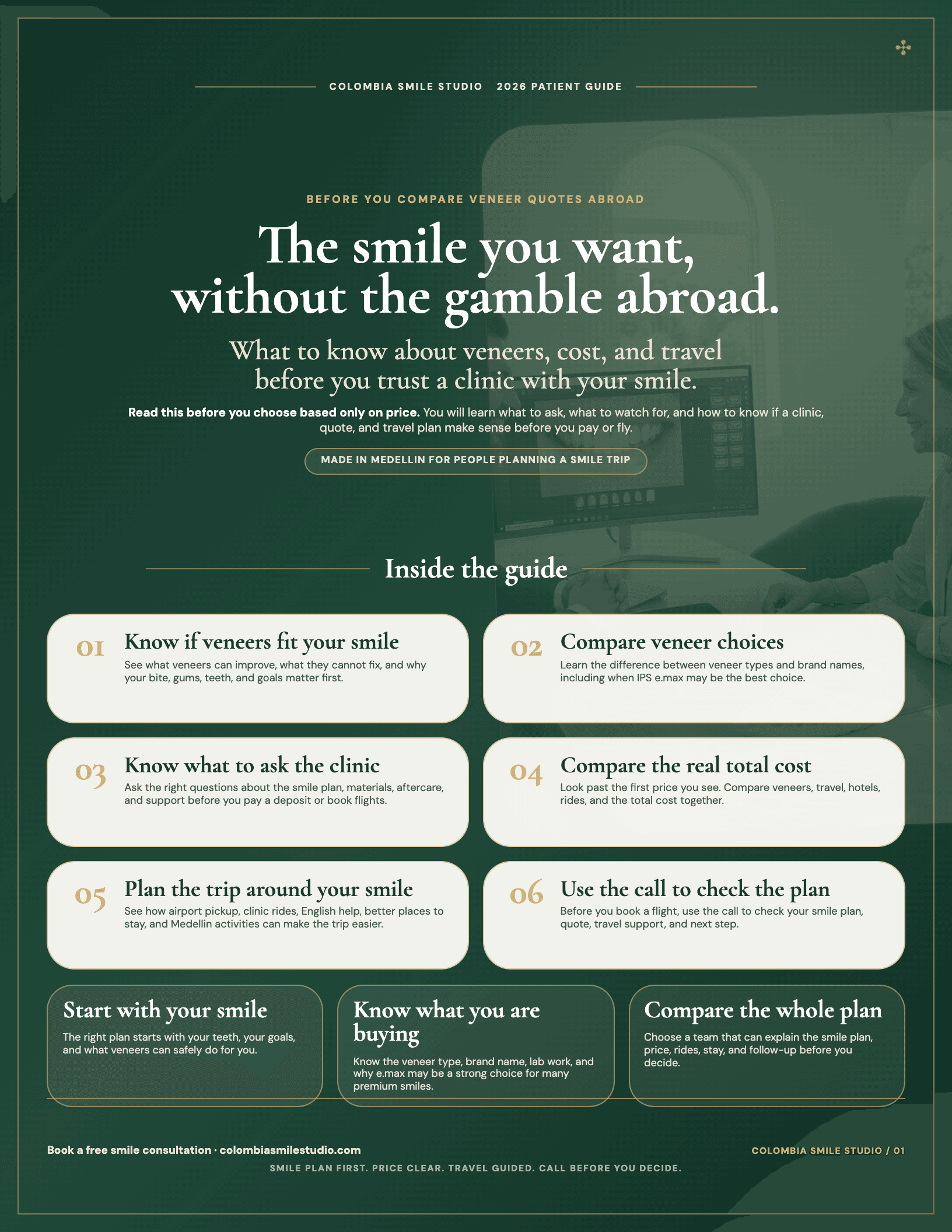
The free Colombia Smile Studio guide covers clinic standards and the questions to settle before you fly. It is written for veneers, so take implant staging questions to the dentist assessing you.
State that you want another opinion and identify the part of the earlier implant recommendation you would like reviewed. Ask the reviewing clinician what background information would be useful. Present the earlier recommendation as context, without instructing the new clinician to adopt it.
A referral passes a request or information to a practice; it does not explain your own treatment decision. Ask the receiving practice what assessment is being proposed and what decisions remain to be discussed with you. Clarify the purpose of the referral directly.
Ask the assessing clinician to explain which options are relevant to your situation and how they relate to the proposal you received. Describe what you want to understand about the choice. A general list of alternatives cannot settle that individual discussion.
Ask the receiving practice which information it wants and how it would like you to supply it. Identify the earlier assessment and the question it raises for you. Do not assume that sending a particular document meets all of the reviewing clinician’s needs.
Ask the author what information informed the recommendation and which questions remain open for an individual assessment. Request clarification of any preliminary wording. The fact that a recommendation arrived during research does not tell you whether its author regards it as complete.
Ask each clinician to explain the reasoning and information behind their opinion, including what they understand differently about your case. Keep those explanations attributable to their authors. A difference between recommendations does not, by itself, establish that either clinician made an error.
Get the free Veneers Abroad Guide and see the full picture: real costs, clinic-standard questions, and what to ask before you ever book a flight.
This page is for education only and does not replace an individual dental examination. Read the Terms and Medical Disclaimer.