Porcelain Veneers in Medellín, Colombia: Planning Guide
A Medellín quote that says "porcelain veneers" has not yet told you the material. Because Colombia Smile Studio's clinic sits at a real, named Laureles address, verifying which ceramic sub-type and which lab are proposed is more concrete here than for a city with no clinic to reference.
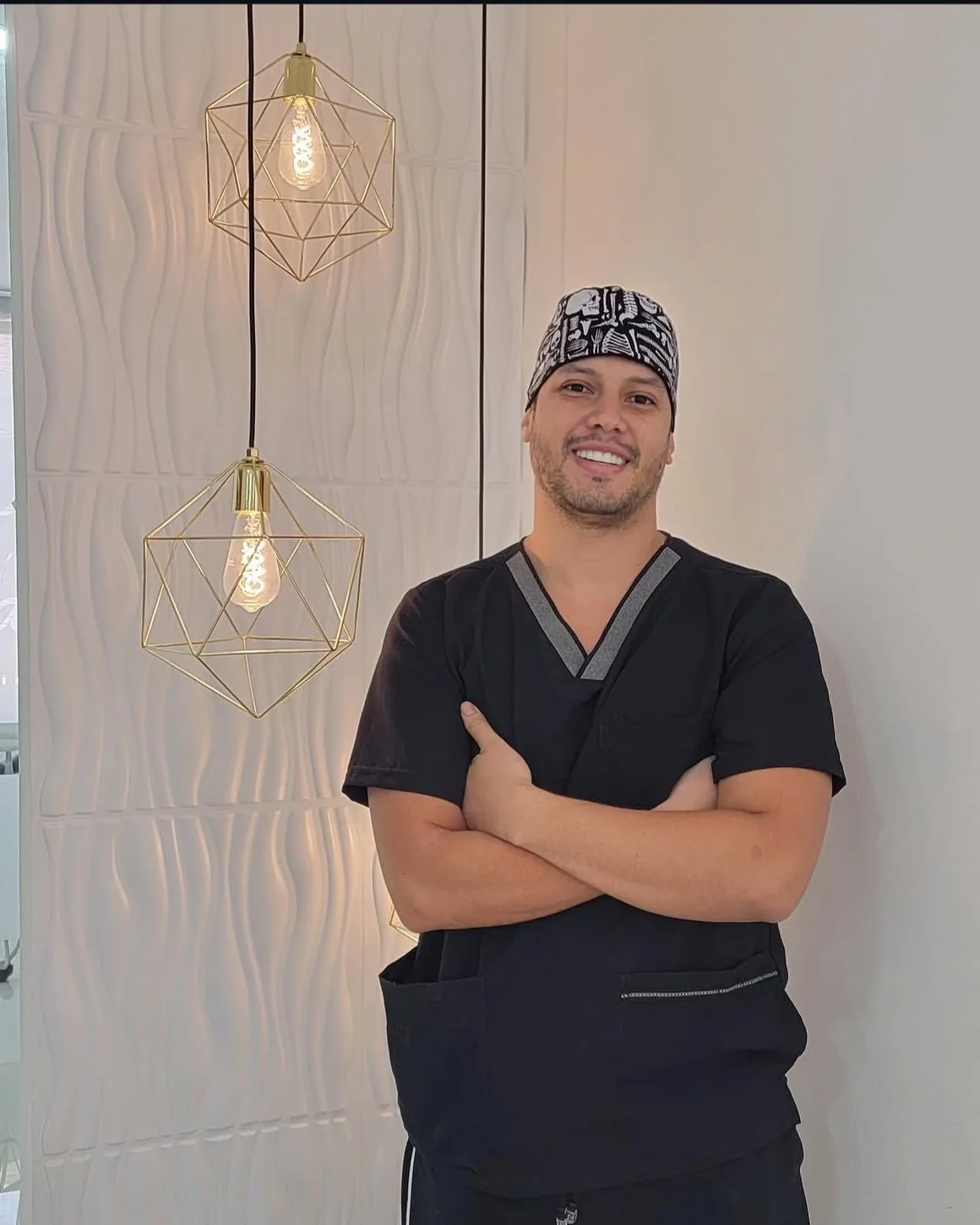
Porcelain is a category, not one ceramic
Three ceramic families are most commonly marketed as "porcelain veneers" in Medellín: feldspathic porcelain (hand-layered, high translucency), leucite-reinforced ceramic (pressed, moderate strength), and lithium disilicate, most often branded Emax (pressed or milled, higher strength). Ask a Medellín clinic to name the exact sub-type rather than accepting "porcelain" alone. Read the general porcelain veneer guide, and the dedicated feldspathic and Emax guides for the two sub-types with their own dedicated depth.
What the evidence says by sub-type
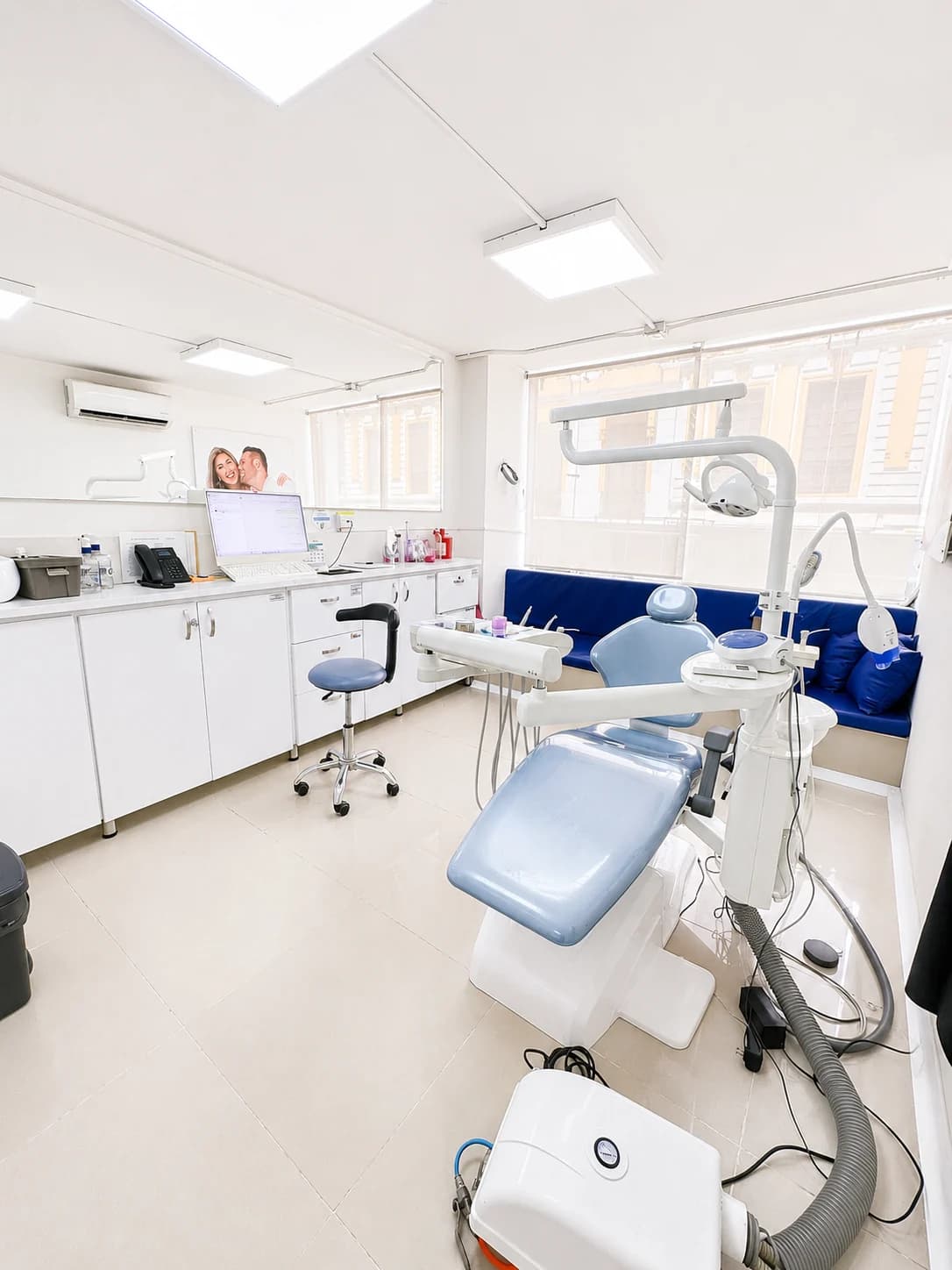
A 2024 systematic review and meta-analysis in the Journal of Esthetic and Restorative Dentistry pooled survival data across these ceramic laminate-veneer families: feldspathic approximately 94.9 percent at one to three years, 95.7 percent at mid-term, and 96.1 percent at long-term follow-up; leucite-reinforced ceramic 100 percent short-term, approximately 97.0 percent mid-term, and 93.7 percent long-term; lithium disilicate approximately 99.2 percent short-term, 98.8 percent mid-term, and 96.8 percent at roughly 10.4 years. These are pooled research figures, not a guarantee for any individual Medellín case.
Free planning guide
Want a practical way to compare veneer materials and plan a Medellín trip before you choose a clinic?
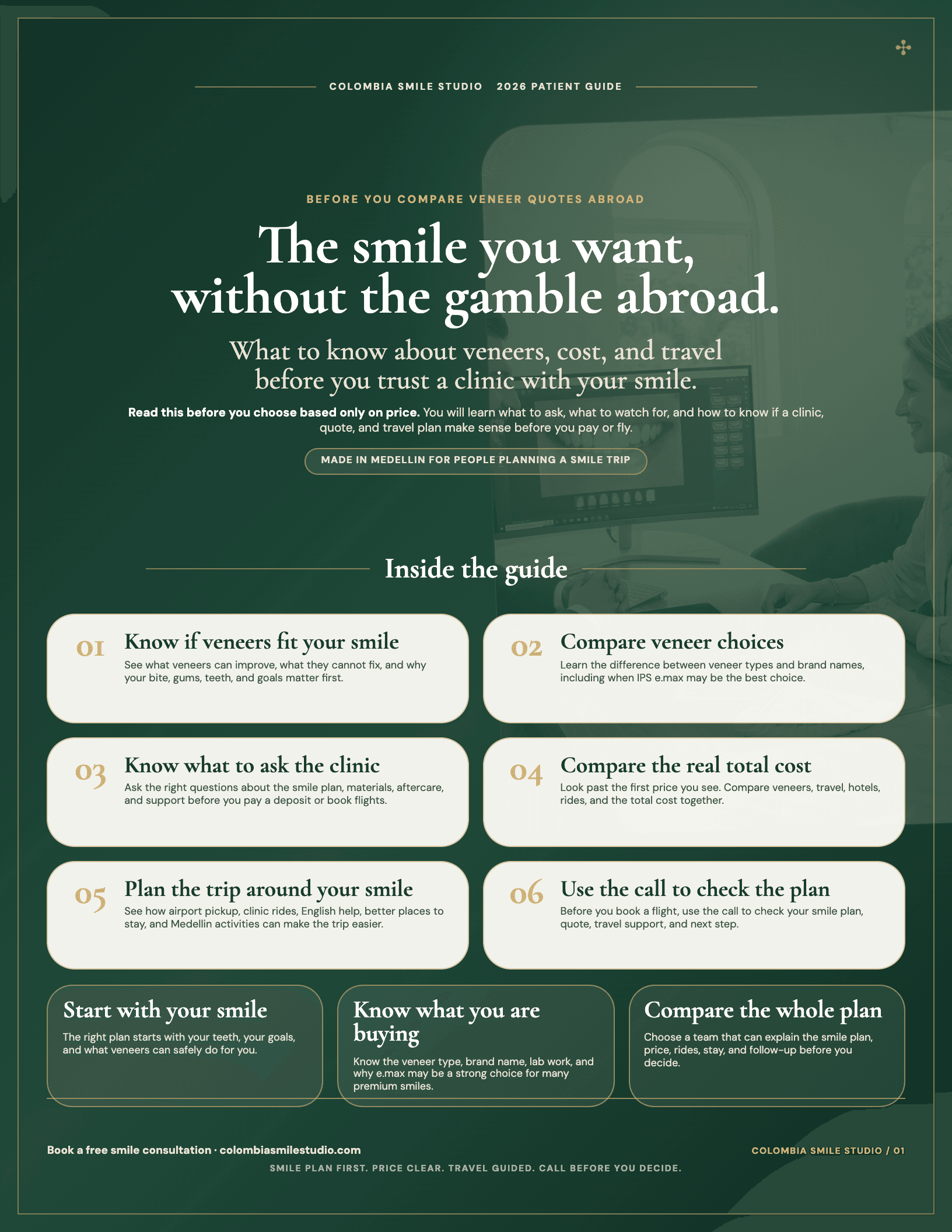
Verifying a porcelain plan at a real Medellín address
A country name alone does not establish the quality or safety of any individual treatment plan. What decides that is the treatment itself: the restoration and material class (composite resin vs porcelain; Emax vs unbranded ceramic), the lab and where it is, the treating dentist's credentials, the aftercare and adjustment path once you are home, and the written warranty or remake policy. Weigh those against the quote, not headline price alone.
Colombia Smile Studio's shared clinic address in Laureles (CF-002) is a real starting point, but it still does not substitute for asking the specific questions: which ceramic sub-type, which lab, how many design-approval steps, and what the written aftercare and remake policy covers. Ask for these in writing before you travel, the same as you would for any provider.
What to ask about lab turnaround for a Medellín trip
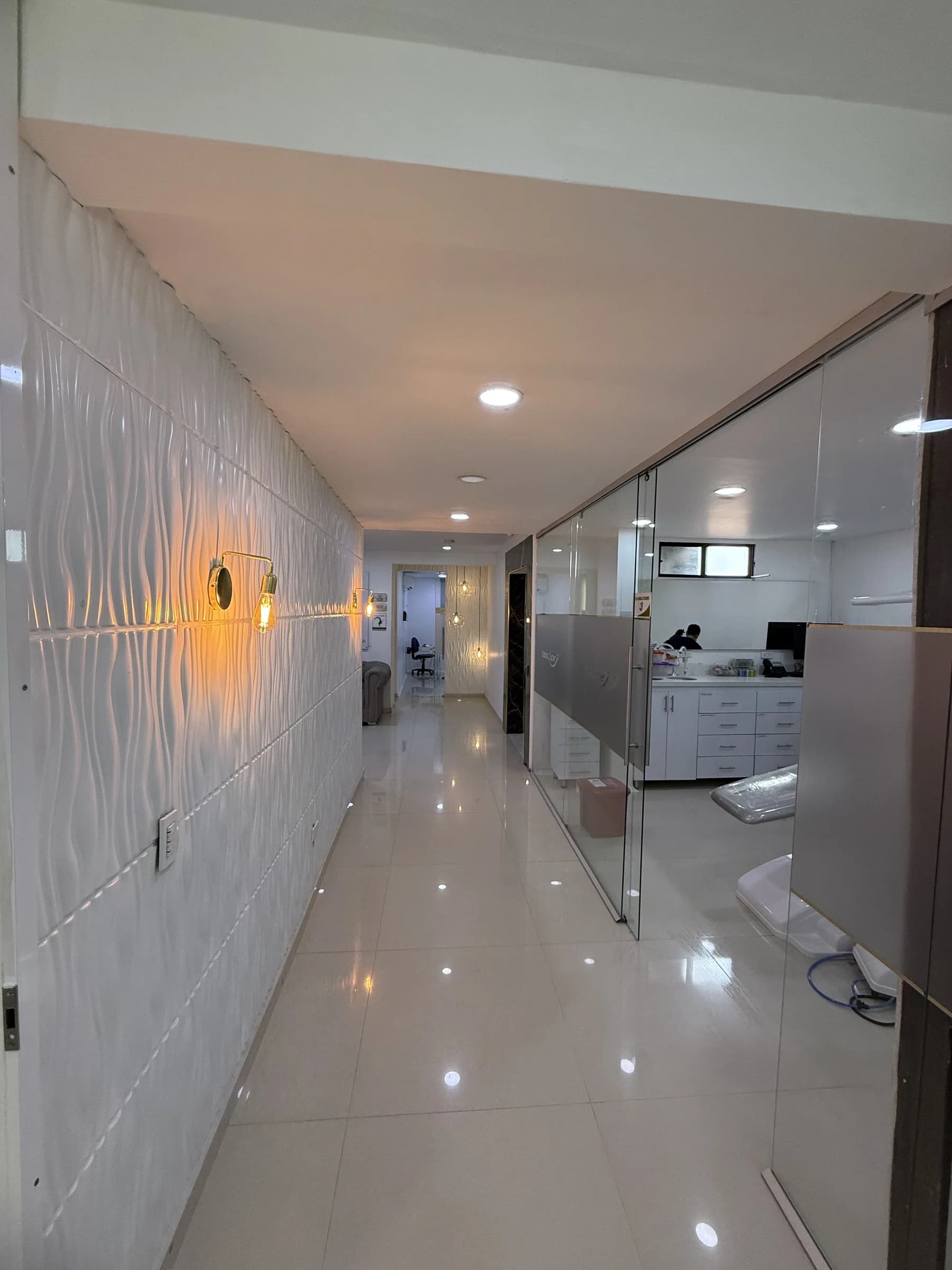
Because your trip has fixed arrival and departure dates, ask specifically how the lab's fabrication schedule fits your Medellín stay: whether the ceramic is made locally or sent elsewhere, how long turnaround typically takes, and what happens if a shade or fit adjustment is needed before you fly home. If a repair or remake is needed after you return, ask whether that requires shipping new impressions or scans back to the same lab, and what the estimated turnaround and any return-travel implication would be.
What a Medellín porcelain trip means for your itinerary
A porcelain plan that spans a design-approval step and a final bonding appointment usually means at least two clinic visits during your Medellín stay, with time between them for the lab to fabricate the veneers. Build that gap into your travel dates rather than assuming a single appointment will cover the whole process. If the clinic proposes a same-trip design-and-bond timeline, ask exactly how many days apart the two appointments are and what happens if the ceramic needs a second try-in before final bonding. The Medellín city hub covers the broader arrival and multi-visit contingency planning that applies to any Medellín treatment trip, not porcelain veneers specifically.
Evidence table
| Metric | Figure | Source |
|---|---|---|
| Feldspathic pooled survival (short/mid/long) | ~94.9% / ~95.7% / ~96.1% | Klein et al., J Esthet Restor Dent 2024;37(3):601-619 |
| Leucite-reinforced pooled survival (short/mid/long) | 100% / ~97.0% / ~93.7% | Same source |
| Lithium disilicate pooled survival (short/mid/~10.4yr) | ~99.2% / ~98.8% / ~96.8% | Same source |
| Clinic address | Av. 80 #46-46, Laureles - Estadio, Medellín | CF-002 |
Frequently asked questions
Is "porcelain veneers" one specific material in Medellín?
No. "Porcelain" is a category. A Medellín clinic proposing porcelain most often means feldspathic porcelain, leucite-reinforced ceramic, or lithium disilicate such as Emax. Ask the clinic to name the exact ceramic and lab.
How can I check whether a porcelain study matches the ceramic proposed in Medellín?
Ask the dentist to identify the ceramic subtype in your plan and the subtype examined in the study being discussed. Have any mismatch explained before using that research to form expectations. Request a separate explanation of what the evidence can and cannot tell you about your own proposed treatment.
Does Colombia Smile Studio's Laureles clinic make porcelain veneers in-house?
This page does not attest to a specific lab arrangement. Ask the clinic directly whether the ceramic is fabricated in-house or by an outside lab, and where that lab is located, before committing to a plan.
What should I ask about porcelain veneer timing for a Medellín trip?
Ask how the lab's fabrication schedule fits your travel dates, how many design-approval visits are needed before final bonding, and what happens if an adjustment is needed before you fly home. Building this into your itinerary avoids surprises during a short trip.
Can I compare a Medellín porcelain quote to one from home using price alone?
No. Confirm the exact ceramic sub-type and lab first, since price differences often reflect material and lab differences, not just labor cost. Use the all-in cost model to compare quotes on the same basis.
How many trips to Medellín does a porcelain veneer plan usually need?
This depends on the case, but a design-approval step and a separate final-bonding appointment are common, which usually means at least two clinic visits with a gap for the lab to fabricate the ceramic. Ask the clinic how many days apart those visits are planned and whether a same-trip timeline is realistic for your case before you book travel.