Are no-prep veneers made of porcelain?
Some are porcelain. Others are made of composite resin. The term “no-prep” describes how the dentist plans to treat your tooth before placing the veneer. To find out what you are buying, ask for the material name and the planned enamel changes as two separate entries on the quote.
Compare the questions before you choose a clinic or plan a trip.


Quick Answer
A quote that says only “eight no-prep veneers” is missing two details. Which material will cover each tooth, and will the dentist change any edge or surface first? Ask for both answers before comparing that quote with a porcelain or composite plan.
Are no-prep veneers made of porcelain if a laboratory makes them?
A lab can make ceramic veneers and it can also make composite veneers. An indirect veneer is one made outside the mouth and bonded afterward. A direct composite veneer is shaped on the tooth. Knowing who makes the veneer helps explain the visits, but still leaves the material question open.
For example, researchers have followed patients treated with lab-made composite veneers that required no tooth preparation. That is a documented example of what the label can include. It cannot establish whether the same technique would suit your tooth.
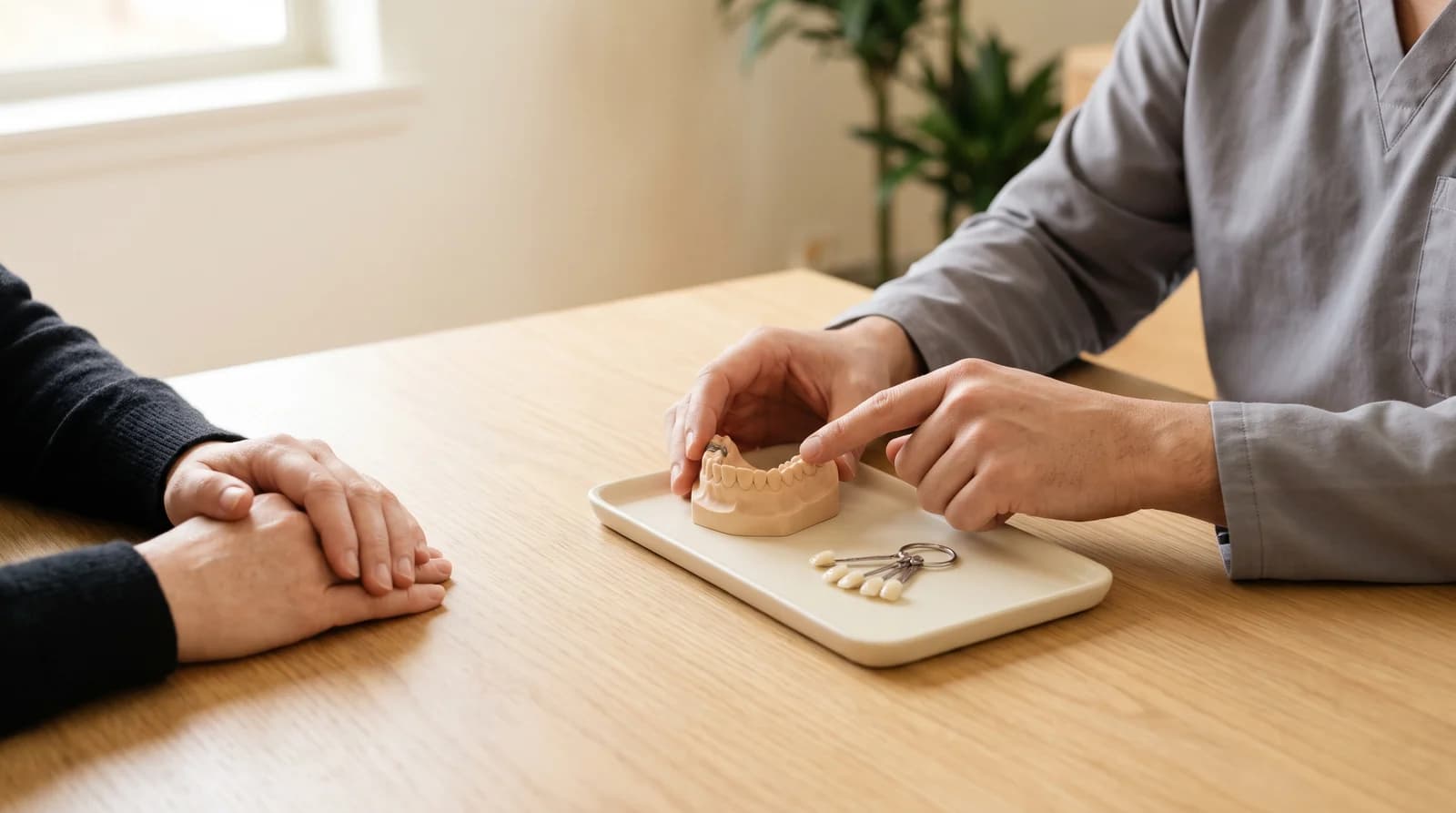
Are no-prep veneers made of porcelain when the quote names Lumineers?
Lumineers is a branded veneer system. DenMat lists more than one ceramic option and more than one preparation technique. Ask which product the dentist intends to prescribe for you and what that means for the shape of the tooth underneath.
If one front tooth sits farther forward, ask to see a side view of the planned result. Adding a thin layer still adds volume. A material name alone cannot show you how that extra thickness will look or where the opposing teeth will meet.
What should I look for on a revised estimate?
Ask for the tooth numbers, material, fabrication method and any planned reshaping. If a clinic uses both “no-prep” and “minimal prep” during the consultation, ask which teeth each term refers to. A small adjustment can matter to someone choosing treatment specifically to preserve enamel.
Also ask how the dentist would manage a chipped corner for that particular material. A repair discussion is more useful when you know whether the dentist is talking about adding resin, polishing an edge or remaking a laboratory restoration.
Follow-up questions
Does a no-prep quote guarantee reversibility?
Ask what removing the bonded material would involve for your tooth. The preparation label alone does not establish whether the original surface could be restored.
Does porcelain have to be made in the mouth?
A porcelain veneer is made outside the mouth to fit the tooth. The dentist checks its fit and appearance and bonds it in place.