What should I do if one veneer hits first when I bite down?
Contact the dentist who fitted the veneer and ask for a bite check. Describe which tooth seems to touch first and whether it happens when you close, chew or move your jaw sideways. Avoid trying to file the veneer yourself.
Compare the questions before you choose a clinic or plan a trip.


Quick Answer
A useful description is where the teeth meet first and when you notice it. Call the dental office rather than repeatedly biting down to see whether the feeling goes away.
What should I do if one veneer hits first when I bite down after the numbness wears off?
A tooth that catches as you close gently may feel different from one that catches only when you chew on the opposite side. Note which movement produces the sensation without repeatedly testing it on hard food.
Tell the dentist which ordinary movement reproduces the contact. A photo can show the position of your teeth but may miss what you feel.
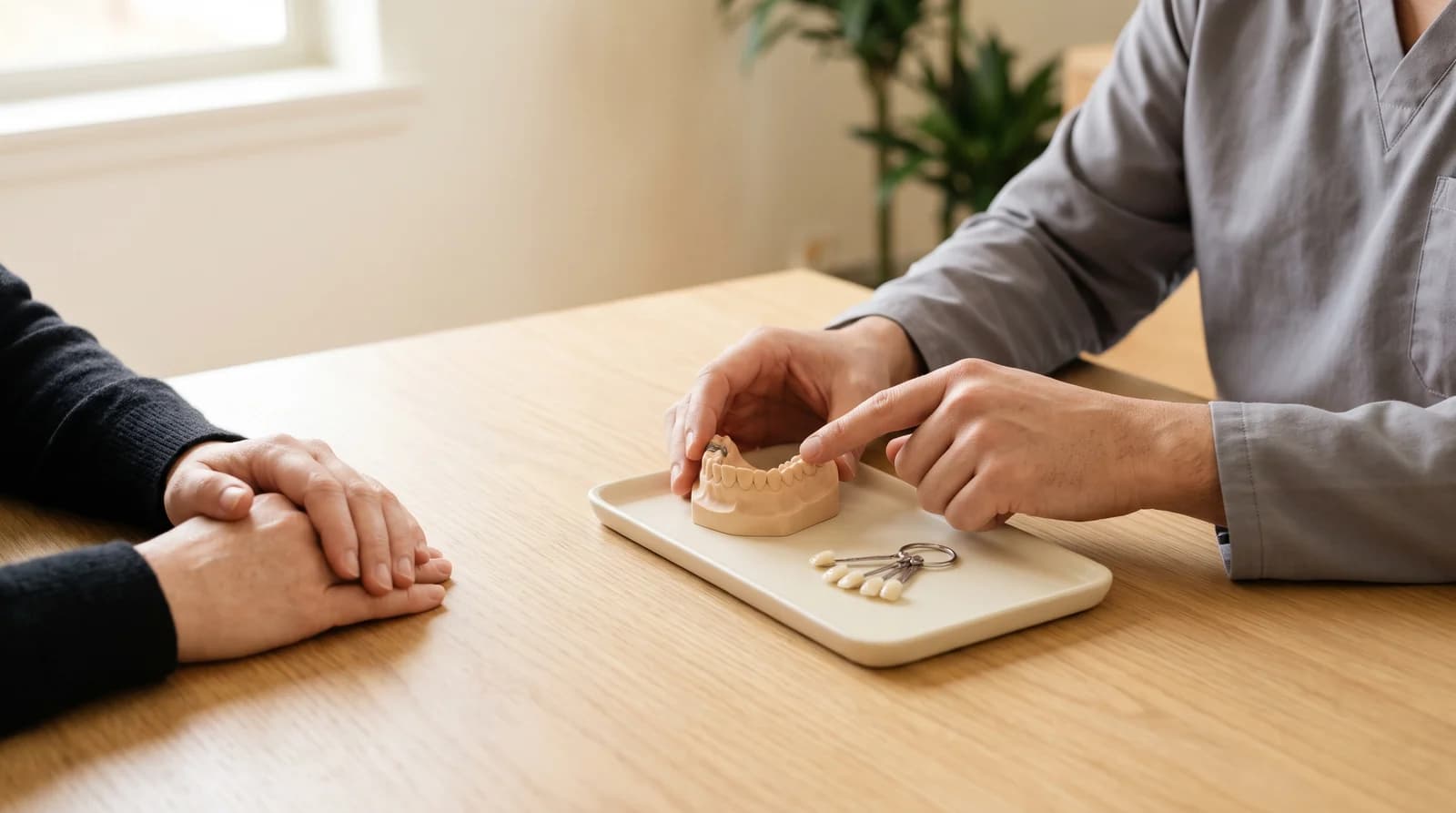
What should I do if one veneer hits first when I bite down after I have flown home?
The dentist can examine the veneer and check how the upper and lower teeth meet. That assessment helps distinguish a contact needing adjustment from a different cause of discomfort.
Ask the treating clinic to share the date and location of the veneer with your local dentist. Keep the appointment details and any written advice together, especially if the treatment plan includes a follow-up visit.
If you have already traveled home
Tell the treating clinic when the sensation started and ask for the handoff details. A local dentist can assess a painful or uncomfortable bite while you arrange follow-up with the original clinician.
Follow-up questions
What should I do if one veneer hits first when I bite down and the tooth has become painful?
Report both the early contact and the pain promptly. Tell the dental team if the restoration feels loose or the tooth was struck. These details will help them decide when to see you.
Should I wait until my next routine cleaning?
Call the dental office about the new contact and let them advise on timing. Mention pain, looseness or a recent blow to the mouth when arranging the appointment.