Veneers in Spanish: Dental Terms for Patients
Veneers are called carillas dentales in Spanish. Learn the words for the restoration, its material and the changes you want, so you can follow the discussion in either language.
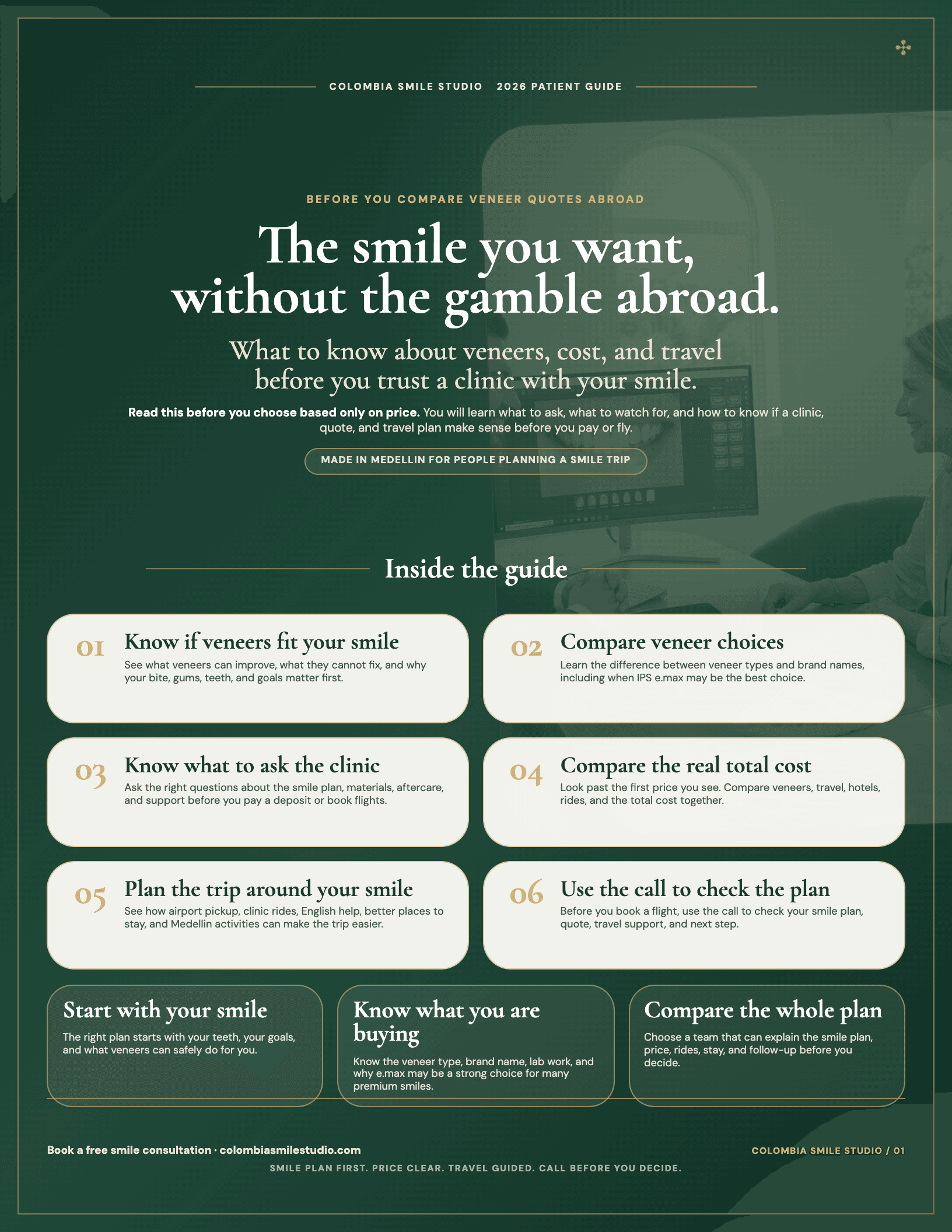
Get the Colombia Smile Studio veneer travel guide.

Veneers in Spanish: the short answer
The Spanish term for dental veneers is carillas dentales, also written as carillas in a dental context. Porcelain is porcelana. Composite resin is resina compuesta. A crown is a corona. Keep the restoration name and material together when reading a bilingual proposal.
What veneers are called in Spanish
Carillas dentales names dental veneers. The shorter word carillas appears in the Oral Health Foundation's Spanish patient guide. Spain's General Council of Dentists also uses carillas estéticas dentales when discussing cosmetic veneers.

You do not need a large vocabulary to begin. Start with the full term, then find the word describing what the veneer is made from. In carillas de porcelana, porcelana supplies that material detail. A line containing only carillas leaves it unstated.
Keep the wording you received when asking for an explanation. Changing an unfamiliar term to one you recognize can hide a difference you need to understand. This glossary helps you identify that difference.
Veneers, crowns and bonding: terms that describe different treatment
| English term | Spanish wording | How to read it |
|---|---|---|
| Dental veneers | Carillas dentales | Names the restoration |
| Crowns | Coronas | A different restoration from a veneer |
| Composite resin | Resina compuesta or composite | Names a material. The procedure still needs to be stated |
Start by asking what each treated tooth will receive. The American Dental Association's veneer guide explains that a veneer covers the front surface of a tooth, while a crown covers the tooth rather than only its front. A composite veneer is made from tooth-colored filling material bonded to the tooth. When resin covers the visible front surface, it may be described as a composite veneer. Then name the material class.
The General Council of Dentists distinguishes carillas from coronas. GC's Spanish clinical publication uses resina compuesta for composite resin, including in direct veneer descriptions.
For bonding, ask which surface will receive the resin and what shape the dentist intends to create. The word resina alone does not tell you whether the discussion concerns a small repair or coverage of the visible front. Keep that procedure description beside the material name. See the composite veneer guide for more background.
Describing veneer materials and smile goals
Separate what you want to change from the treatment suggested to achieve it. “I want the edges to look less square” gives your dentist a specific preference to discuss. “I want veneers” names a procedure, without explaining the appearance you have in mind.
| Word in Spanish | English meaning in this context |
|---|---|
| Porcelana | Porcelain |
| Resina compuesta | Composite resin |
| Tamaño | Size |
| Forma | Shape |
| Tono | Shade |
Porcelana, color, forma and tono appear in the Oral Health Foundation's Spanish veneer explanation. Tamaño appears in the General Council of Dentists' veneer explanation. Resina compuesta appears in the GC publication.
Bring one clear observation for each concern. For shape, point to the edge or corner you mean. For color, explain whether you want a change across your smile or a match beside teeth you are keeping.
For a ceramic proposal, request the specific product name alongside the broad material class. The porcelain veneer guide explains that treatment. For color selection, the veneer shade guide explains the next discussion without turning a translated word into a shade choice.
Reading a bilingual treatment proposal
Read the English and Spanish versions side by side, one treated tooth at a time. Match the tooth identified, the restoration planned and the material named. If one version says veneer and the other says corona, mark that line for clarification before treating the documents as equivalent.
Run this field check:
| Field | What to compare |
|---|---|
| Restoration | Veneer in English corresponds to carilla in Spanish |
| Material | Porcelain corresponds to porcelana |
| Teeth involved | Both versions identify the same teeth on the dentist's chart |
| Recorded preference | Both retain the same request about shape or color |
A matching translation does not fill in an absent product name or explanation of the proposed work. Put your question beside the missing field so it stays attached to the relevant entry.
Keep the clarified document with your notes, especially when a later proposal changes the restoration or the teeth included. For general treatment background, return to the veneer overview.
This page is for education only and does not replace an individual dental examination. Read the Terms and Medical Disclaimer.
Keep your veneer questions in one place
Use the Colombia Smile Studio veneer travel guide to understand material choices and prepare your questions about care after treatment abroad.
Questions about veneers in Spanish
Does carillas by itself specify porcelain or composite?
No. Carillas names the veneers without specifying their material. Look for wording such as carillas de porcelana or carillas de resina compuesta. If the material is missing, ask the dentist to identify it rather than assuming that the shorter description means porcelain.
How can I check that the English and Spanish descriptions name the same restoration?
Compare each tooth entry in both versions. Veneer should correspond to carilla, and crown to corona. Then compare the material wording and the teeth identified on the chart. Ask the dentist to clarify any mismatch and provide one consistent explanation of the proposed work.