Which surfaces of the tooth do veneers cover?
A veneer covers the visible front surface of a tooth. Its edge can stop short of the biting edge, reach it, or extend a short way onto the back, depending on the design. Your dentist can show you where the proposed veneer will end on your own tooth.
Compare the questions before you choose a clinic or plan a trip.


Quick Answer
Ask for two views of the proposed restoration: one facing your smile and one looking down at the biting edges. The second view can reveal a change that is hard to see on a front-facing photograph.
Which surfaces of the tooth do veneers cover when the biting edge is chipped?
A corner chip raises two questions. Does the front surface need a change, and does the missing edge need to be rebuilt? A veneer design may include that edge. A smaller bonded repair may also be worth discussing if the rest of the tooth looks and feels right to you.
Point to the chipped corner on an old photograph if you have one. Ask where a repair would end and where a veneer would end. Seeing both outlines on the same tooth makes it easier to understand how much sound surface each choice would involve.
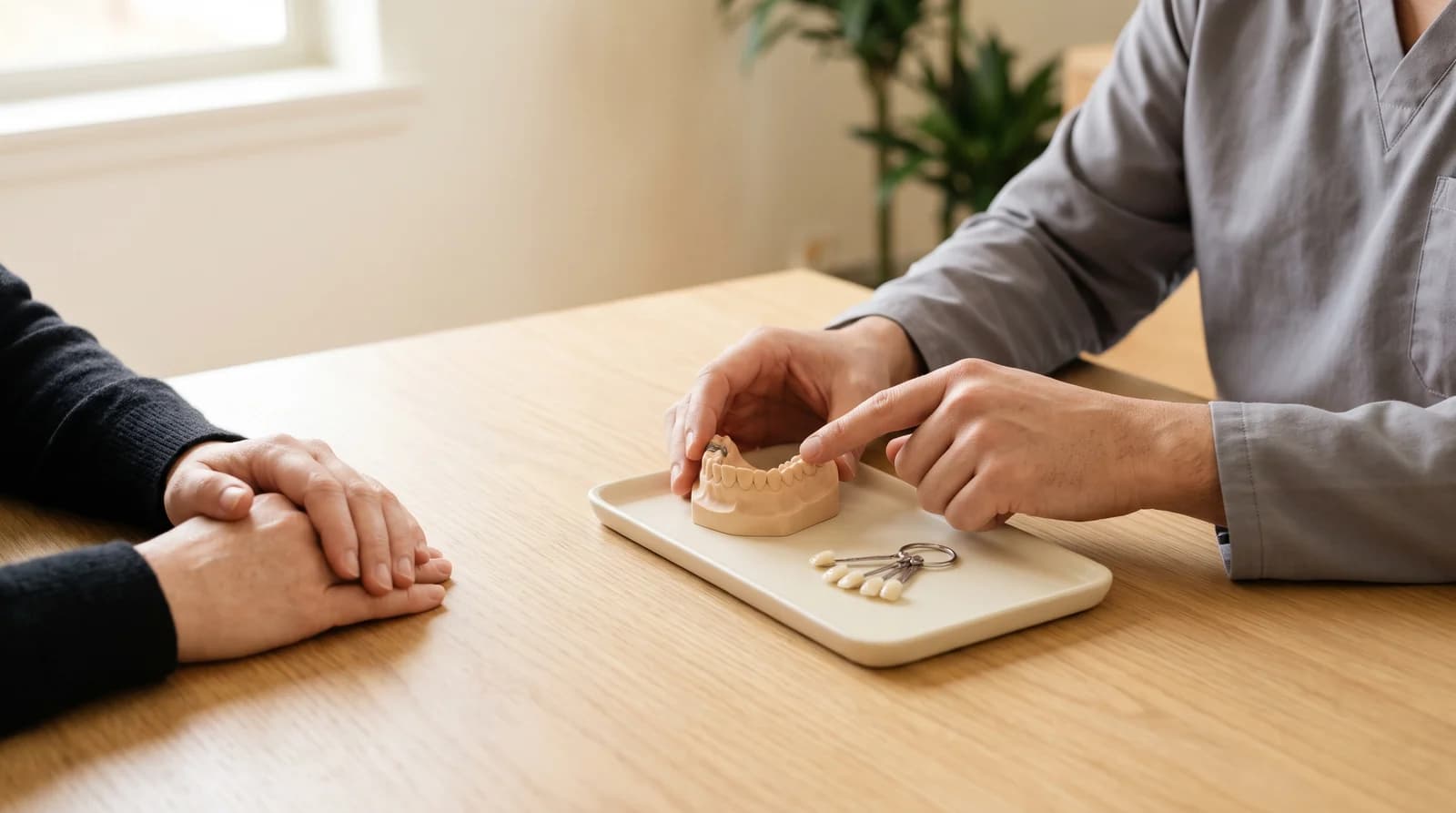
Which surfaces of the tooth do veneers cover near the back and sides?
The boundary between the restoration and the natural tooth is called the margin. With a front veneer, the side margins can sit near the neighboring teeth. Some ceramic designs carry the restoration over the biting edge onto part of the tongue-facing surface. Others preserve that edge.
If a plan proposes changing the width of two teeth to close a space, ask the dentist to draw the side margins and show how you would clean the area. A photo of the intended front shape may leave that part of the design unclear.
How can I tell whether a quote describes a veneer or a crown?
Ask the dentist to trace the coverage around one tooth. A crown covers the tooth much more extensively, typically around its sides as well as over the biting surface. A material such as ceramic can be used in either design, so a lab or material name alone will not identify which one is planned.
For a tooth with a large filling, ask why the recommended amount of coverage is appropriate. Get the restoration type written beside that tooth number. That lets you compare estimates that might otherwise list the same number of ceramic units for very different treatments.

Follow-up questions
Does a veneer cover the root of a tooth?
A veneer is designed for the visible crown portion. If your concern is an exposed root or a changing gumline, point that out during examination so the dentist can assess the cause.
Can the uncovered part of a veneered tooth still get a cavity?
Yes. Natural tooth structure remains, including near the margins. Continue brushing with fluoride toothpaste, cleaning between the teeth and having the margins checked at your dental visits.