Can no-prep veneers stain or change color over time?
Can no-prep veneers stain or change color over time? They can, but the pattern depends on the material and the part of the restoration you are seeing. Ceramic, composite, bonding cement, the veneer edge and nearby natural enamel do not all change in the same way.
Compare the questions before you choose a clinic or plan a trip.

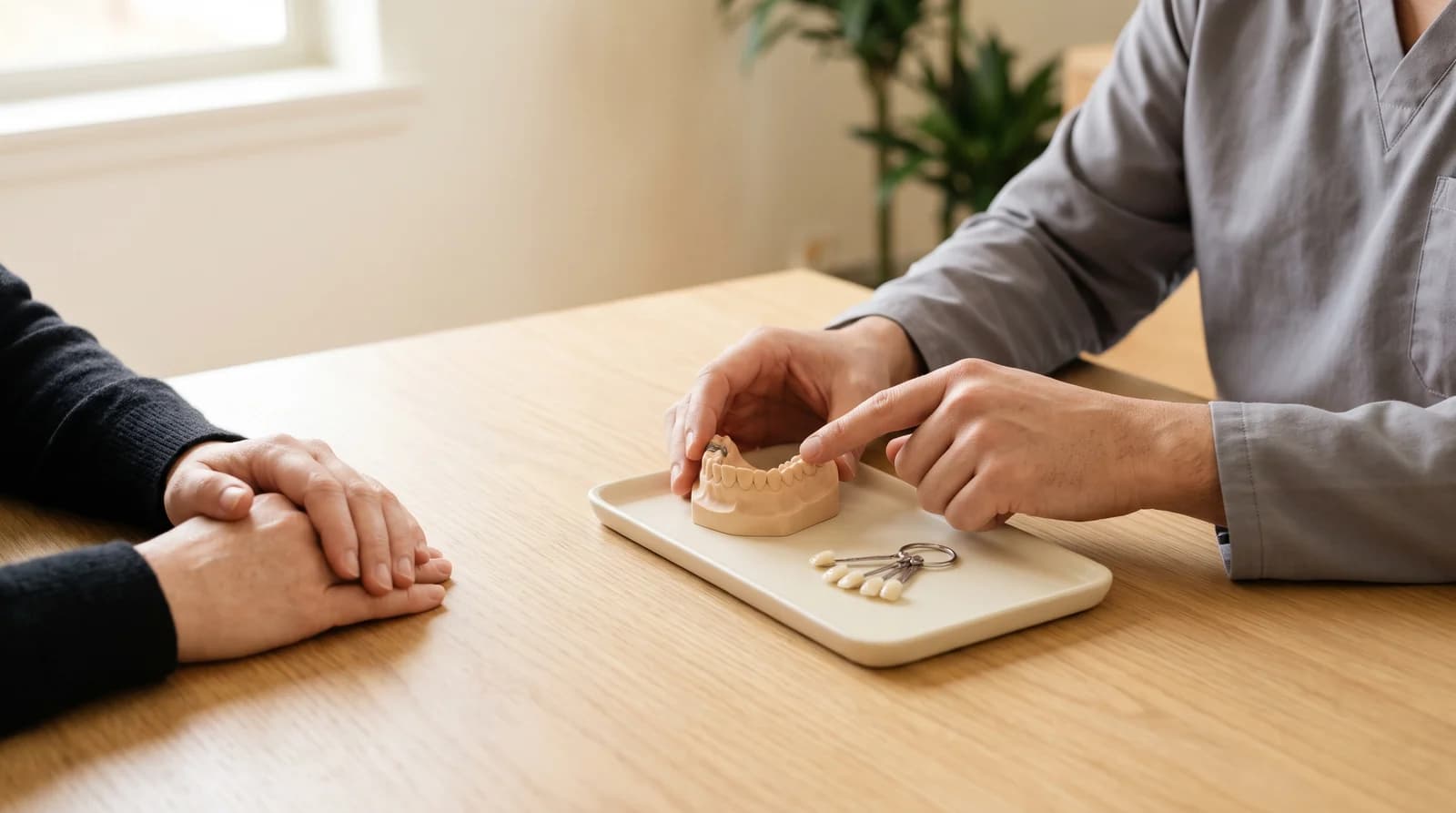
Quick Answer
Look at the location of the color difference. A dull surface across several teeth, a narrow line at one edge and a single darker veneer give the dentist different clues about the material and area to examine.
Can no-prep veneers stain or change color over time if they are ceramic?
Polished ceramic is generally more resistant to external pigments than resin-based material. The appearance can still change if deposits collect on the surface, the natural teeth beside it darken or a line becomes visible near the bonded edge.
No-prep porcelain is often thin, so the tooth and bonding layer beneath it can influence the final appearance. That does not mean every darker area comes from below. A dentist has to examine the surface and margin, then compare the neighboring teeth.

Can no-prep veneers stain or change color over time if they are composite?
Composite no-prep veneers can show surface roughness, marginal discoloration and changes in color match. A seven-year clinical case series of indirect composite no-prep veneers reported those findings, but it cannot predict when or whether one patient will notice them.
Tell the dentist what you drink, whether you smoke and when the change first appeared. Bring an older photograph taken in similar light if possible. It can help separate a gradual overall change from a recent problem on one tooth.
Seven-year clinical study of indirect composite no-prep veneers
What to do when a no-prep veneer looks darker
Start with an examination and professional cleaning rather than an aggressive stain remover. Ask whether the visible change is superficial and whether polishing is appropriate for the material. If floss catches, the gum bleeds or the line has grown, point that out during the visit.
Cleaning, polishing, repair and replacement answer different problems. Ask the dentist to show you the color difference and name the part of the tooth or restoration involved before choosing one.
Follow-up questions
Can no-prep veneers stain or change color over time even if I avoid coffee?
Yes. Other pigments, smoking, surface wear and changes in neighboring natural teeth can alter the comparison. The exact cause depends on the material and where the change appears.
Does a dark line mean the no-prep veneer itself is stained?
Not necessarily. The line may involve surface deposits, the veneer edge, the bonding area or exposed tooth. A dentist can inspect it and check whether the margin is intact.