Can I get a single veneer on one tooth?
Yes. A dentist can place one veneer when the visible surface of one tooth is the part you want to change. Whether it is a good choice depends on what bothers you, how much healthy tooth the procedure would preserve and how that tooth meets its neighbors.
Compare the questions before you choose a clinic or plan a trip.


Quick Answer
Point to the tooth and finish this sentence: “The one thing I want to change is ...” A small chip, a dark front surface and a tooth that sits out of line can lead to three different treatment plans.
Can I get a single veneer on one tooth if only the edge is chipped?
Bring a photo taken before the chip, if you have one. Ask the dentist to show you how much material a bonded repair would add to the missing corner and how much of the front surface a veneer would cover. A tiny chip and a broad area of damaged enamel deserve different conversations.
Before deciding, ask what would happen if the repair chipped again. Knowing what can be touched up and what might need replacement helps you weigh the first appointment against future care.
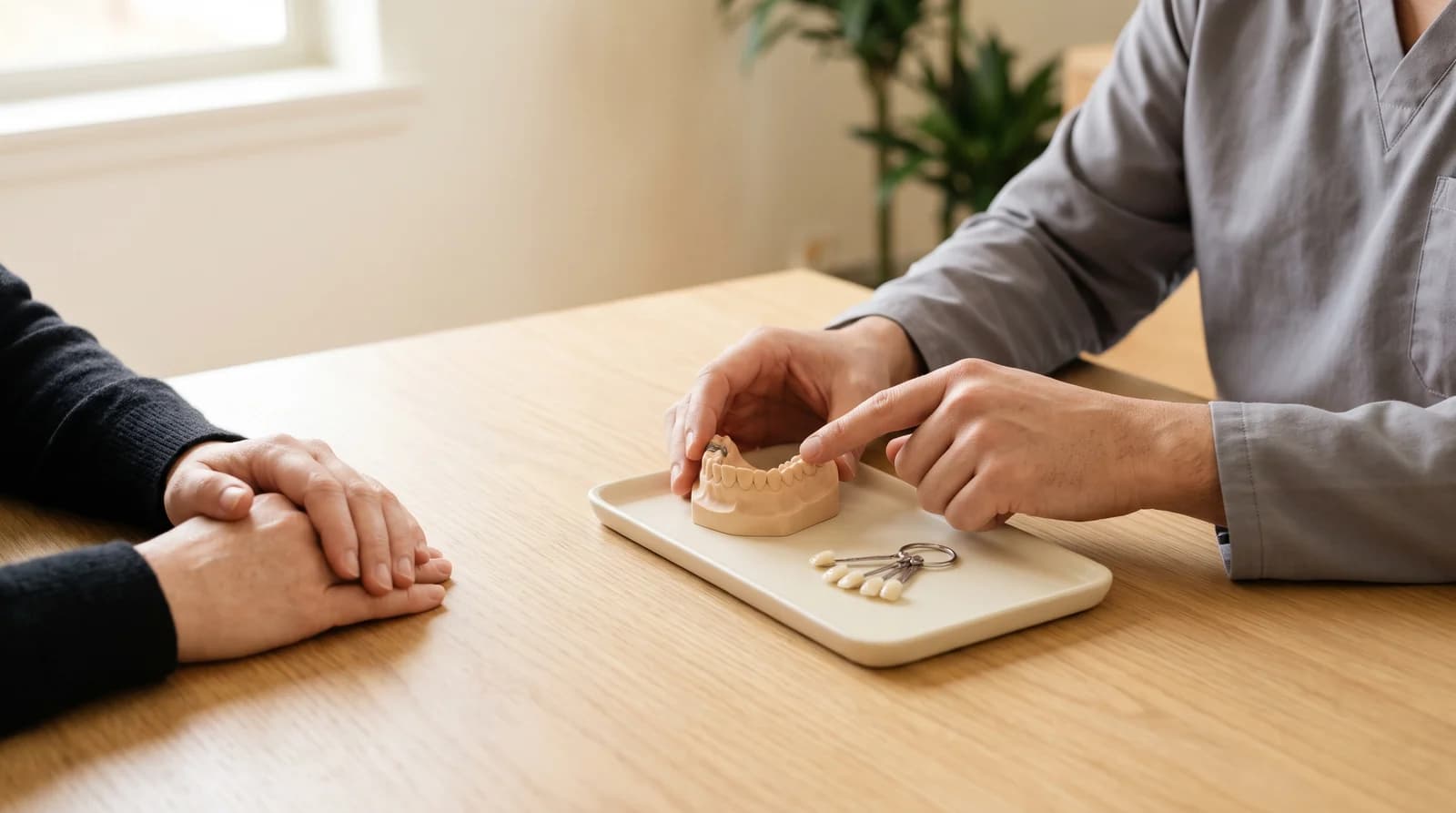
Can I get a single veneer on one tooth that looks out of line?
Ask the dentist to show you the proposed outline from the side. Adding material to a tooth that already projects forward can make it look bulkier. A veneer changes a tooth’s outline. Moving that tooth within the arch requires a different treatment.
If you are offered a mock-up, look at it with your lips relaxed, then speak and smile. Ask the dentist to check where the opposing tooth touches it. A convincing front-view photograph answers only part of the question.
What should the quote for one veneer include?
Have the clinic identify the tooth, material, preparation and visits in writing. If the proposal includes the tooth beside it, ask what specific problem treating the second tooth would solve. You can ask to see the one-tooth plan on its own.
For a visible front tooth, ask how the dentist and laboratory will communicate the shade, texture and edge shape. An adjacent natural tooth gives them a reference during planning and a useful comparison before final bonding.

Follow-up questions
Do I have to buy veneers in pairs?
No. Ask the dentist to explain the purpose of each tooth on the estimate. A healthy neighboring tooth can serve as a shade and shape reference without being treated.
What if the tooth I want to change is missing?
A veneer needs an existing tooth to bond to. A missing tooth calls for a discussion about replacement options, such as a bridge or an implant-supported crown.