A1 vs B1 Tooth Shade for Veneers
A1 or B1 is a starting point for a shade discussion. Compare the references, then review how the proposed veneer would look beside the teeth that remain visible.
Get the Colombia Smile Studio veneer travel guide. Illustrative dental objects. Colors are not a clinical shade match.

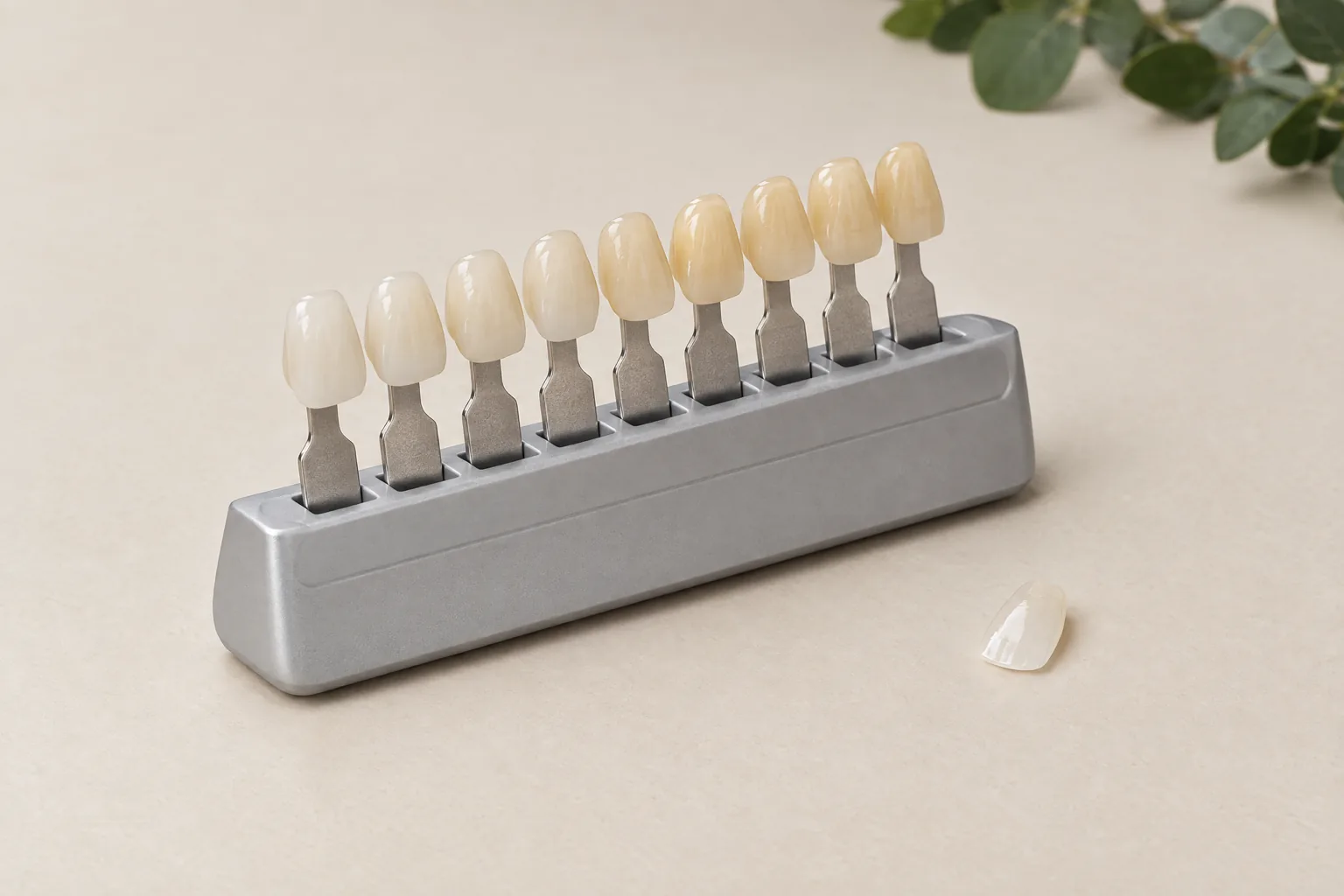
A1 vs B1 tooth shade: quick answer
In the cited VITA classical brightness ordering, B1 comes before A1, from lighter to darker. A1 and B1 also belong to different hue families. This describes reference tabs, not a guaranteed difference between finished veneers. Review both physical samples with your dentist, alongside the proposed material and the teeth that will remain visible.
What A1 and B1 tell you about veneer color
Start with the full name: VITA classical A1-D4. VITA's manufacturer guide places A1 and B1 in different hue families. Hue describes the color family; it is not the same as brightness.
The family descriptions do not mean an A1 veneer will look brown or a B1 veneer will look yellow in your smile. They identify the reference groups used in the guide. Ask to see the actual tabs together rather than choosing from those words alone.
For veneers, keep the reference separate from the finished restoration. The code gives you a starting point to discuss; it does not choose the material or predict the result.
Illustrative veneer materials. Displayed colors are not a clinical shade match.
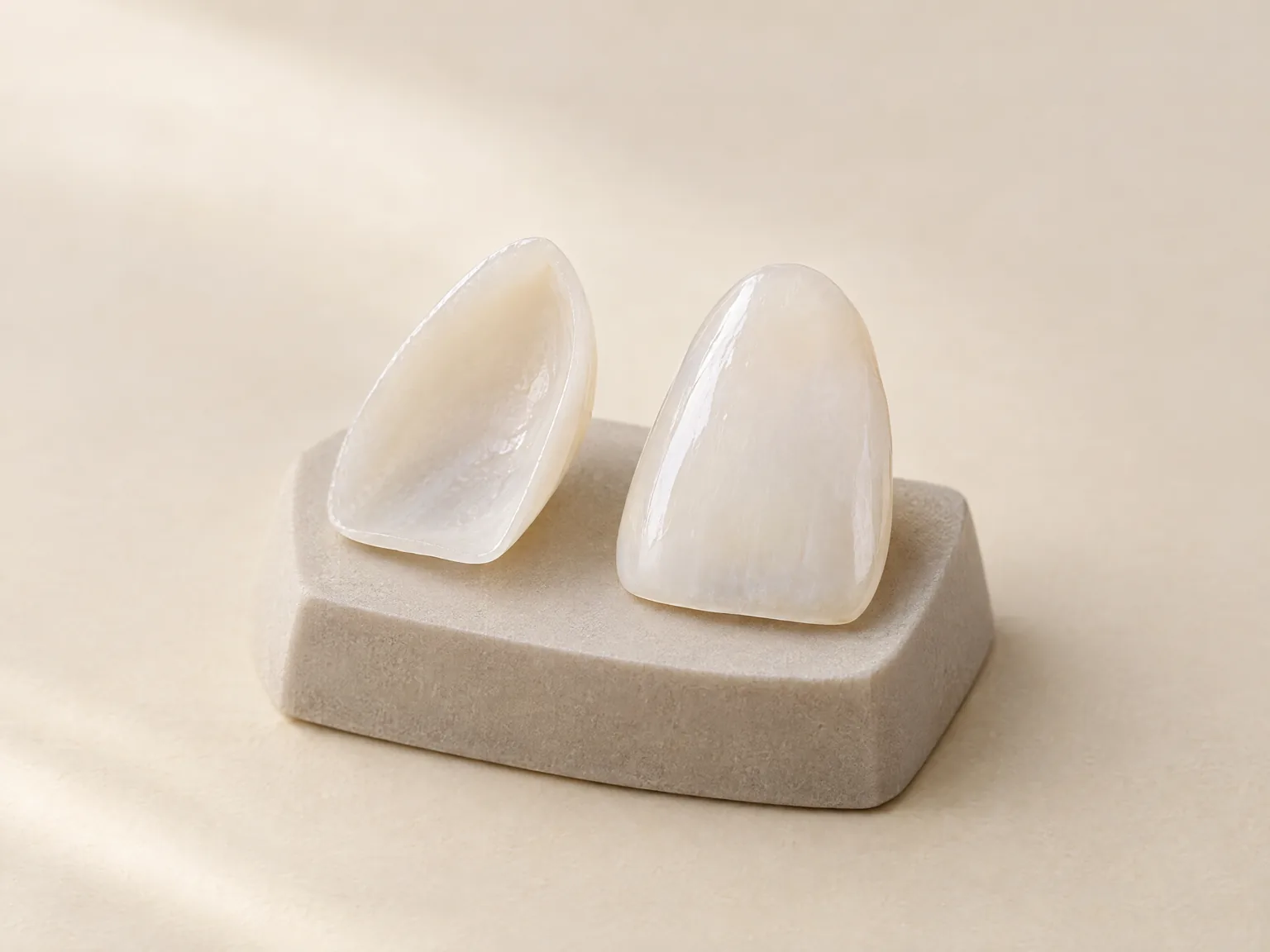
Compare A1 and B1
Read the two references within the same shade system.
| Comparison point | A1 | B1 |
|---|---|---|
| Shade system | VITA classical A1-D4 | VITA classical A1-D4 |
| Manufacturer's hue family | Reddish-brownish | Reddish-yellowish |
| Cited brightness order | Follows B1 from lighter to darker | Comes before A1 from lighter to darker |
| What to review | The physical A1 tab beside the visible surrounding teeth | The physical B1 tab beside the same teeth in the same lighting |
| What the code cannot promise | A particular finished veneer appearance | A particular finished veneer appearance |
In the cited VITA classical brightness ordering, B1 comes before A1, from lighter to darker. This describes reference tabs, not a guaranteed difference between finished veneers.
Why A1 or B1 tooth shade is only part of the veneer decision
A shade label is only part of the material decision. Ivoclar's scientific report on ceramic appearance describes the influence of the underlying tooth, ceramic thickness and translucency, and the material used to bond the restoration. Its illustrations show why the same ceramic shade need not produce the same overall appearance over different underlying shades.
Ask what those factors mean for the proposed A1 or B1 veneer. If a tooth needs a color change, ask how the material would handle the starting shade. The code alone cannot answer that clinical question.
Lighting also matters when comparing references. VITA's shade-taking instructions recommend daylight or standardized daylight lamps and neutral surroundings. Ask to see the two samples under the same conditions.
For the wider chart and the distinction between shade systems, read the veneer shade guide.
Bring a clearer preference to your A1 vs B1 tooth shade review
Compare A1 and B1 tooth shade against the teeth that will stay visible
Ask to see A1 and B1 beside the surrounding teeth, including teeth outside the proposed veneer plan. Explain whether your priority is blending with those teeth or discussing a brighter appearance. Let the dentist assess what is appropriate for your case.
A1 vs B1 tooth color: describe what you like in a reference image
Point out the brightness or overall character that appeals to you. Treat social posts and forum photographs as conversation starters. They do not establish the shade system, material or lighting behind the image, and they cannot guarantee the same appearance for you.
A1 or B1 tooth shade: clarify what you can review before final bonding
Ask what review steps are available for your specific plan and what each step can show. Confirm how the proposed system and code will be recorded, who receives that information, and which changes remain possible at each stage. Do not assume a particular mock-up, temporary or try-in process is included.
The porcelain veneer guide explains the restoration. For shape, texture and overall appearance, read how veneers can look natural.
This page is for education only and does not replace an individual dental examination. Read the Terms and Medical Disclaimer.
Keep your A1 vs B1 tooth shade questions together
Use the Colombia Smile Studio guide as a starting point for planning veneers abroad. Keep your A1/B1 questions alongside it for your individual dental discussion.
A1 vs B1 questions, answered
Is B1 tooth shade whiter than A1?
In the cited VITA classical brightness ordering, B1 comes before A1, from lighter to darker. That comparison describes reference tabs. It does not establish how much brighter a finished veneer would look in your mouth.
Are A1 and B1 in the same shade family?
They belong to the same VITA classical A1-D4 guide, but different hue families. VITA describes the A family as reddish-brownish and the B family as reddish-yellowish. The shared numeral does not make the two references equivalent.
Does choosing B1 guarantee brighter veneers than A1?
No. The finished appearance also depends on the ceramic, the underlying tooth and the material used to bond the restoration. Compare the proposed restoration with your dentist rather than treating a shade code as a result guarantee.
Can an A1 vs B1 photo show which shade suits me?
A photo can help you explain a preference, but it is not a calibrated shade match or an individual prescription. Ask to review physical A1 and B1 samples beside your teeth in suitable lighting. Any colors shown on this page are illustrative.
What should I compare before approving A1 or B1 veneers?
Confirm the shade system and code, compare both references beside the teeth that will remain visible, and discuss the proposed material. Ask what the available review stage can show and which changes remain possible. Do not assume a particular mock-up, temporary or try-in stage is included.